 Written by
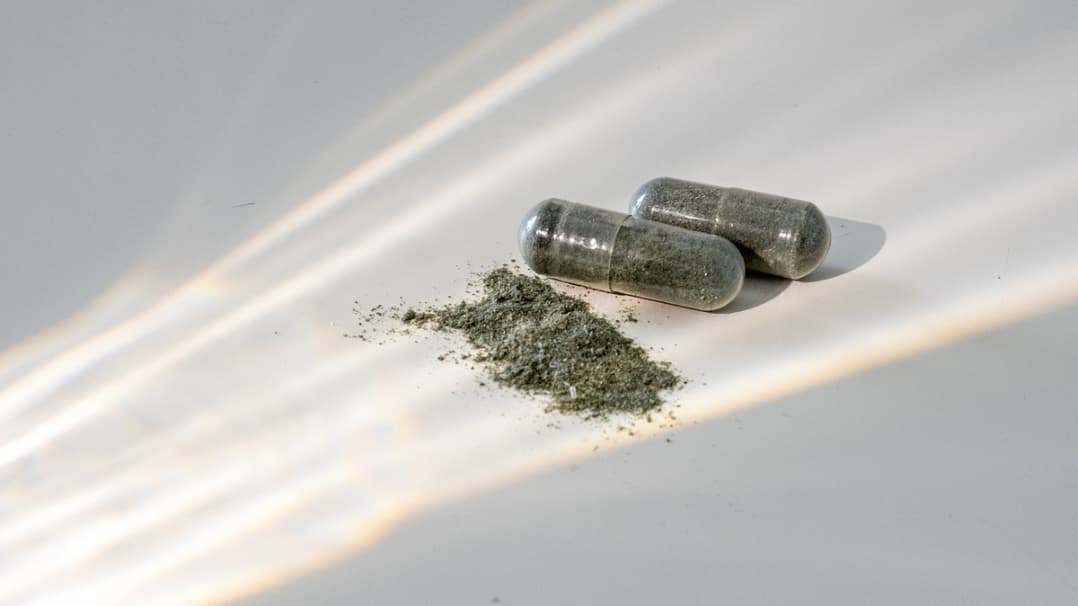
If you've heard the buzz about stem cell therapy and wondered what it means for your health, this episode is your definitive guide. In practical terms, that means looking beyond hype and asking how everyday choices, supplements, and protocols can provide real stem cell support for longevity so your repair systems keep working for you as the years go by. Dan Pardi joins Sandy Kruse to break down the complex science of your body's innate repair system—from understanding what stem cells are, to the difference between pluripotent and unipotent cells, and how their function declines with age (a phenomenon known as stem cell exhaustion).
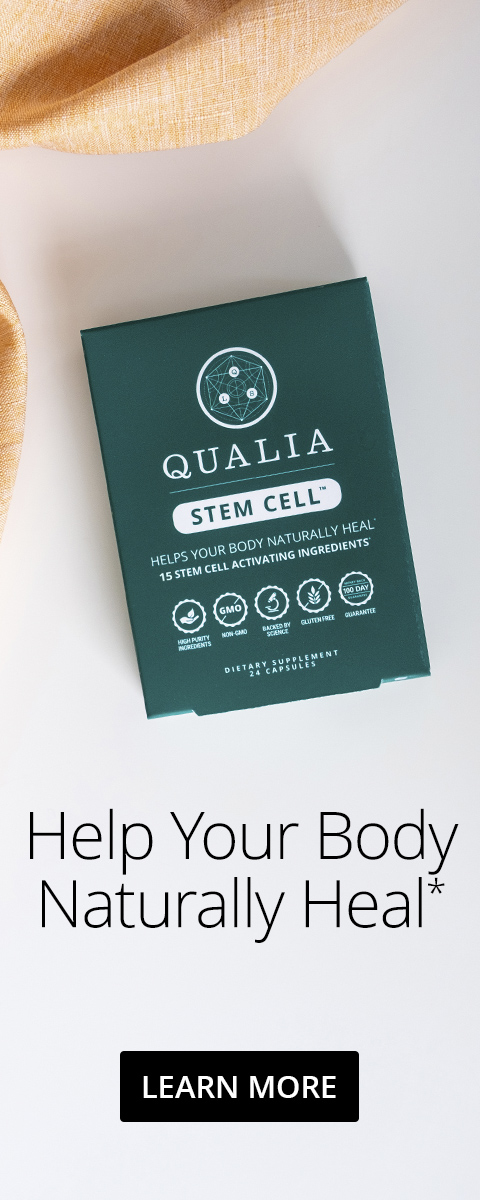
Discover why simply driving stem cell proliferation isn't the goal, and how the Qualia Life Sciences team formulated their groundbreaking stem cell supplement to support the entire delicate life cycle of a stem cell—promoting balance, not overstimulation. Learn about the signs of aging linked to stem cell exhaustion, the critical connection between senescent zombie cells and inflammation, and a powerful monthly scientific wellness stacking protocol involving senolytics, NAD boosters, and the Qualia Stem Cell ingredients. Get ready to put on your "thinking caps" and explore the future of aging gracefully.
---
Listen to the podcast here
Stem Cell Therapy & Supplements: Regeneration, Wellness, & Longevity
Understanding what is stem cell exhaustion can help frame why stem cell therapy and supplements are such a big focus in the healthy aging conversation—because they aim to support the very repair systems that gradually lose efficiency with time. As more people look beyond one-off interventions and toward systems-level repair, Advanced Stem Cell Supplements for longevity are emerging as a way to complement lifestyle, sleep, and nutrition by supporting the body’s built-in regenerative programs over the long term.*
I have Dr. Dan Pardi, and he's the Chief Health Officer at Qualia Life Sciences. I’ve had numerous recordings with Qualia Life Sciences, and they're always so engaging. This is a different discussion on stem cells than I’ve had before. The discussion that I had before was more about stem cell transplants versus stem cell activators. Actually, I did do another show about stem cell activators as well. I find it really fascinating. I find the research really fascinating. This show is going to have a lot of science in it with Dr. Dan Pardi, so buckle up and put your thinking caps on so that you can really soak it all in because there's so much information in this episode.
Last week was my first shorter episode. I am changing my style a little bit. I am having amazing guests like Dr. Dan, but I'm also doing more of the explorative wellness topics. Not to dictate to you what is health and what you must do to be healthy and so on and so forth, but more about how can you think critically about what the health news says for you and if it's applicable for you because one thing I have noticed in this space of wellness is there are a lot of opinions and a lot of expert opinions, and it's great. We definitely need experts. There's no question.
However, a lot of times, it comes to us in a way that seems like it is blanket advice for everyone, which is why I do these more, think about it short-form podcasts. They also tie in with my Substack. Go find me there. If you like to read short explorative essays, it's SandyKruse.Substack.com. Be sure that you are following me on Instagram. I’ve been a little quieter there lately, but that's definitely my most active platform. I'm also on TikTok. I'm on Threads. I'm on Facebook. I have a private Facebook group as well as a page. I'm everywhere, you guys. Just search for Sandy K. Nutrition everywhere and follow me there. Let's cut on through to this amazing interview with Dr. Dan Pardi of Qualia.
---
Welcome to Sandy K. Nutrition Health and Lifestyle Queen. With me, I have a special guest. His name is Dr. Dan Pardi. He is the Chief Health Officer at Qualia Life Services where he leads education to advanced health span and peak performance. He's the Founder of HumanOS.me and the host of HumanOS Radio, the official podcast of Sleep Research Society. Dan has advised elite military units, Fortune 500 companies and startups through his consultancy, Vivendi Health.
He holds a PhD in Cognitive Neuroscience from Leiden University and Stanford, and speaks regularly at events like TED Talks, VC firms, and the Institute for Human Machine Cognition. Our talk is all about stem cells and how this research can change the face of health and wellness as we know it. Most of you guys who have been following me for a while know, I think this is maybe my third show on stem cells.
As most of you know, I like to always have authentic conversations with integrity. Also, things change. I’ve been around for a while, so things change. This is new. I know it's new from Qualia. I'm excited. I’ve started using it. I'm really excited to hear about the newest research on stem cell activation. With that, welcome, Dr. Dan. Thank you.
Thank you so much for having me, Sandy. It's great to be here.
I always like to start with is asking my guests, how did you get here? How did you get into this space? I think it's always important to the conversation.
Dan's Background & Journey To Qualia
I’ve been interested in health my whole life, and I’ve tried to pinpoint when that began. Probably when I was younger, I was into sports. I cared about performing my best. I unfortunately got a couple of injuries early on. I think that might have been fortuitous in a way, because it started me thinking about my relationship with my body at that time. How do I get back onto the playing field? How do I heal?
From that point on, after I dealt with those injuries, I almost became the de facto sports performance coach for my entire team, whether it was soccer or basketball. I was always reading about and researching ways to improve my performance. That led to a very authentic interest in physiology. I went on to pursue a Master's in Exercise Physiology at Florida State.
I did a variety of things. I didn't know what I wanted to do. I worked in bioinformatics, which is, I was a part of a company called Double Twist, really exciting company in the race to sequence the human genome for before anyone else. We had raised $75 million and ended up creating these products that were, where we'd work with pharmaceutical companies to help them use genomic data in the drug development process. It was very technical, very cool work we were doing.
I went into the pharma business for almost a decade. I worked in sales for about a year, but my interest was really on the science side. I ended up becoming the first member of medical affairs, which does post-marketing scientific support for products. Where I worked was in sleep. That's where my interest in sleep.
I knew nothing about sleep, and all of a sudden, I was fascinated by it. The condition that we were working on was narcolepsy. Most people think of it as excessive sleepiness, but it is that plus some other symptoms as well. There weren’t really great medications. We were trying to help improve their quality of life and reduce their symptoms.
For that company, I ran a research grant program. I started an outside organization called IISRA, where I created an executive committee with representatives from big names. We po petitioned the FDA to change the guidance for how to employ best practices in these types of grants. Anyway, so that was great work. I really loved it. Working in sleep, I then had my own questions, so I decided to pursue my PhD.
It was right at the time when quantified self technologies were coming into the market and the ancestral health movement was taking off, so the idea of the Paleo diet. I started my PhD, but I knew that I didn't want to become a lifelong researcher. I knew that I wanted to be working in more of the public health sphere, doing scientific wellness.
I finished my PhD. By the way, I did it because I was also so curious about answering some questions that I had around ecological sleep loss. In a lot of sleep studies, what they'll do is they'll give you one full night of sleep deprivation to then see how whatever parameter of interest changes in response to no sleep. That's interesting because you can test the capacity here is does sleep actually affect this?
What's more practical is what if we just lose a couple of hours here and there does things like eating behavior and decision making, do those things change in response to what's much more normal in society? Those are the questions that I asked. All the while, I had started to create my own behavior models. I dissected well-known behavior models in the world, and I then rebuilt my own called the Loop model to adopt and sustain health behaviors.
I presented that at Stanford Medicine X and Health 2.0 and some other conferences. That became the basis by which I tried to operationalize a health tool called HumanOS to then make people smarter, more knowledgeable, wiser about their own health practices. I did that for a long while. That's where the podcast came into play. I started my podcast back in 2014 because at that time, what I was missing was a direct conversation with the researchers who did their work.
A lot of times, it was interpreted through a person who was a personality, who had varying degrees of knowledge in different areas, but was oftentimes a good communicator. I wanted to go right to the source. That's why I started my podcast and interviewed over 100 professors in the health sciences. It was great.
I grew up in Northern California, moved to Texas in the early 2020s, I became the chief health officer for large brand, $500 million brand called Restore Hyper Wellness. They were democratizing these ideas of like sauna and cryo and compression and red light, all ideas that I think have a lot of potential. That was great. The company ended up going in a direction of performance medicine, which I think is really interesting and cool too, but I am firmly more interested in what I call scientific wellness. The how lifestyle supports our health.
I joined Qualia in 2025. I’ve been friends with the company for a long time, and I’ve really admired how they do their job how they see their responsibility in the space, the products that they make. They were looking for somebody who would be able to communicate the science around all the products that they're creating and beyond. It just felt like a really good fit. I'm here and I have the chance to talk with you.
You've done a lot, Dan. About Qualia, I have a longstanding relationship with them and I love their products. I’ve been also supporting them for many years. I’ve had many conversations with other doctors, practitioners within the Qualia space. You've done a lot. Even the sleep, you see so much about sleep nowadays.
If you're scrolling through Instagram, you're seeing all these sleep coaches, you could see I’ve got my devices on. I'm a big believer in not just tracking, but resolving. Obviously, I know that you would support this, it's so bio individual. What works for you may not work for me. I'm a 55-year-old menopausal woman. Of course, sleep is going to be a factor in my life.
That applies to just about everything. I really appreciate your comment about our individuality.
I actually posted about that, Dan, because there's a new docu documentary out and it's really fascinating. I started to watch it and I'm like, “The scientific community, meaning also MDs, are catching onto the fact that not all pharmaceuticals work the same for all people. Not all supplements work the same for all people. It's just so bio individual and I think it's never going to be a one size fits all. That's all.
I love the take that you have on wellness, and I think talking about stem cells, it's now a big topic. I’ve actually done an interview a couple of years ago, it was a live interview, about stem cell activators. I’ve done an interview about like placenta stem cells or something. I think we need to begin with what are stem cells?
Defining Stem Cells & Their Potency (Different Types)
Yes. That's a great place to start. They are special cells in the body. The best way to think about it without using a ton of jargon is that they make copies of themselves. One of those copies is just a duplicate, like a clone of the original stem cell. The other one can differentiate. It's a part of our repair system and it can become any type of tissue in the body. This is how the body will regenerate when cells die off because they don't last forever, even though we outlive our cells. We replace them at different cadences in different tissues, but we need to be able to replace those cells. The stem cell system in the body enables us to do that.
Different parts of the body have different stem cells, don't they?
Yes, that's right. A term that we use when we talk about stem cells is potency. We have different types of stem cells in the body, and they are based off of their potency. Potency is a word that describes what they can become. If you move down the potency categories, the number of cells that they can become narrows, and there are five main categories of potency.
You have totipotent or pluripotent. Those two basically are stem cells that can become any type of tissue in the body. There are some important differences between them. It's probably more than we need to go into. The best way to think about those two is that it's a one-to-many relationship with totipotent or pluripotent cells. You'll hear pluripotent discussed a lot more. An example of a totipotent cell stem cell would be a zygote.
Of course, that becomes a full human. It can become any type of tissue. You have multi potent, oligo potent and unipotent. Those are the last three types of potencies. Multi potent cells can become multiple cell types, but only within certain lineages. An example would be hematopoietic stem cells. They generate different types of blood and immune cells across the lineages that I mentioned, so myeloid and lymphoid.
A myeloid lineage produces red blood cells and platelets and monocytes, things that you get measured on, on blood work. Also, granulocyte-based blood cells like neutrophils, basophils, things like that. The lymphoid lineage is making your immune cells, B cells, T cells, natural killer cells. You can see that what this multipotent lineage means is that it can become multiple things, blood cells or immune cells, but it can't become anything.
Another example of that would be mesenchymal stem cells. When we talk about stem cells in the clinic, you hear about those to the most, hematopoietic from bone marrow and mesenchymal stem cells. Those form different types of connective tissue. Bone, cartilage, fat muscle, things like that. To continue on the describing potency, you also then have oligo potent cells. They can become only a few closely related types. An example would be an osteo progenitor cell that can only become different types of bone, so osteoblasts or osteoclasts.
Lastly, you have unipotent stem cells, and they can only become one type. They can still self-renew. That is a key feature to stem cells, self-renewal. An example of a unipotent cell would be a muscle satellite cell. As you can see, you have different types of stem cells, all of which self-renew and differentiate. Some can turn into anything and some can only turn into one thing. Actually, if you'd like, we can talk about even how cells differentiate, because for me, when I see those connections, like, “How does this actually work?” That helps me understand this opaque topic a little bit differently. You tell me.
I'm certainly not a scientist in nutrition college. I took science courses, of course. However, high level, you hear in general the term stem cell therapy. I want to break this down so people can understand it. When people go and say, “My knee is wrecked, I want to do stem cell therapy,” that is very different from, let's say, I have a blood cancer and they use bone marrow for some therapy. There's different types of therapies that use stem cells. Maybe if you could break that down simply so that people can understand it because we see this all the time. “I'm going to go for stem cell therapy.” Wait a minute. There are different types of stem cells that do different things, and I need to understand what that means.
Stem cells in the clinic have been used now for a while. Even tracking back to the late 1950s where some stem cell replacement therapy occurred. Just looking at the research history of that as a starting place because that is interesting to look at first because you can then see how it evolved. In 1958, a French oncologist named Georges Mathé performed the first stem cell transplant.
He treated six workers that were exposed to high dose radiation in a nuclear accident in Yugoslavia and Mathé transplanted bone marrow stem cells to restore their blood and immune system. We were just talking about hematopoietic stem cells and how they can produce blood cells and immune cells. That's exactly what he was trying to do. Five out of the six ended up surviving long-term.
One did die of complications, but this was really the first demonstration that stem cell transplants could rebuild human systems after damage. It marked the true beginning of modern stem cell therapy. From there, we have the two groups that typically get anything new once it gets into the commercial area are very wealthy people and athletes. Those are the two groups.
We learn a lot from athletics because what typically happens is that good scientists in that space start to use technologies prior to the very slow time course that can sometimes occur with other types of therapies where they have to go through all these levels of validation prior to getting standardized. It would mean it's implicated uniformly through our entire healthcare system. That can be really frustrating for a lot of people because there's a twenty-year delay, oftentimes, if not more, between the science that shows promise in an area.
I would actually say the timescale is even beyond that when we really know that something is efficacious. Athletics will tend to start using those types of things much earlier than being spread ubiquitously through a healthcare system. Going back to your question, so that was really the first demonstration of stem cell replacement in the body. You saw very positive outcomes there because it's likely that all six of those folks who were exposed to that radiation would've died otherwise.
They were able to replace the stem cells, able to restore the immune system, and that had a very positive effect. Nowadays, you might go and get your own stem cells removed from your body, and there are various ways to do that. They'll either be mesenchymal stem cells from fat or hematopoietic stem cells from bone marrow, and then they will be concentrated and put right back into the body where they can have a regenerative effect.
That is pretty exciting. I’ve spoken with orthopedic surgeons who use this and the guy who I know here in Austin who I have conversations with about this, he's seen great things in the clinic. He's like, “Yeah, it really worked.” I’ve tried. It's not the first thing I try, they're pretty expensive. It might be $4,000 or $5,000 a therapy. If you've got let's say two sore feet that you need to have addressed for various reasons, then it's getting close to $10,000. It's expensive. This can be more expensive than that at other places. If you are performing a little surgery, if you're trying to take stem cells out of bone, you usually go to the iliac crest, which is that prominence in the front of your hip area.
The reason why is because it's a very easy area to get stem cells because there's not much tissue between the bone and the outside. You can aspirate the stem cells from your bone marrow. You can concentrate them, and then you can put them right back in an area where you're dealing with an injury and you need some restoration.
Those are some ways that stem cell therapies are mostly occur. There has been a trend now, a movement towards injecting them IV and having stem cells theoretically repair damage throughout the body. Stem cells do work in that way. We should talk about what is the actual life cycle of its stem cell so people understand how they work naturally.
Those types of therapies, typically, people have to go outside of the United States in order to get them because they are not approved by the FDA. There have been several major issues with companies that were starting to sell unapproved stem cell therapies. In fact, some of the founders had ended up on the FBI's most wanted list because they were just not acting, I would say, ethically in this regard.
There is working ahead of the curve. There's also being grossly immoral by making big claims that have no proof, playing off of people's vulnerabilities, like saying that it can cure things where there's no evidence at all that it could cure that. That's the balance of the industry, the promise, the excitement, and maybe some of the hyperbole.
Stem Cell Therapies Vs. Stem Cell Exhaustion/Aging
I have a couple of questions. Is it true that people who say, “I'm going to go and get stem cell therapy, I have severe arthritis in my knee, I don't want to have knee replacement,” you go, you have the whatever, it's like a small surgery, what's the success rate of that thing? Can't stem cells get too old? If I'm 80, are my stem cells any good to do that with?
That's a really important question. The general thinking is that younger stem cells are going to be more effective because if your stem cells are exhausted, which is a term that is now used to describe what happens to stem cells as we age, and we can, of course, go into what that specifically means, then would simply taking out old stem cells and putting them back into the body really do much good?
The older you get, the more you might need them for some osteoarthritic pain in your knee as the example you used. Is that going to be helpful? There are organizations that are, are looking to try to address this problem of can we bank your own stem cells? You're young, you bank your stem cells, when you get older, you have a knee issue, and then you use your own autologous, which means self, stem cells to then fix.
You avoid the risk of immune rejection when you're using other people's stem cells. That is definitely something that is of interest. There's also interest where you can take your own stem cells and, in a way, make them new again. You go through this process where you can make them young again in a way, and that is some very cool science that is taking place.
There are also new types of cells called MUSE cells, I would say new in that they were discovered in the last twenty years by a Japanese scientist. They seem to avoid some of the immune rejection so you could actually get stem cells from a different person. One thing that's been known for a long time, if you take stem cells and you inject them into the body, they can be tumorigenic. They can form tumors.
That's something that of course we would want to avoid as well. The mu cells do not do that. Yes, there's a lot of different companies that are working in this space. There's a lot of excitement here. The main reason is because as we get older, the ability to replace tissue that dies starts to lose out. The damage outpaces the ability to renew, and then we really start to see the signs of aging.
It can start in the 40s where you start to notice it. It can start before that, but you start to notice it more in the 40s. By every decade, that process yields signs of aging that become more visible, more palpable. The excitement, I would say, high level is that we might be able to tilt the scale. We either delay that curve and then moonshot, we actually have a great impact to keep our bodies renewed well into the human lifespan. Possibly even extend the human lifespan too.
I think that's an important thing to note here, Dan, is what are the signs? Are there any specific signs that and is it about losing stem cells, having dead stem cells? I know senolytics can come into play in this conversation. It's all intertwined. What are the signs? I know I recorded a podcast on the hallmarks of aging, and that probably connects to this. Maybe get into some of that so that people can go, “How do I know? I know if I have a bad knee, that's one scenario. If I have a type of blood cancer, that's another scenario. What about just in general?
Maybe we'll start with what happens to the stem cells? Looking into the Petri dish, if you will, and then we can think about what is the experience? We'll move in that direction. The term is called stem cell exhaustion, and it is this decline in their ability to self-renew and to generate functioning cells. Remember, that is what stem cells do. They have ability to copy themselves and then make a clone of itself.
Also, that's the self-renewal part. Also to generate T cells that become new tissue. Just as you mentioned, this basically leads to reduced tissue repair. That's why it's considered one of the now twelve hallmarks of aging. Just for the audience, if they missed your episode on this, the hallmarks of aging are basically the main biological processes, is that drives how we age.
They include things like genomic instability from DNA damage, shortened telomeres, epigenetic changes that alter how genes are expressed. There's a variety of things that are occurring reliably that we can track when a person ages and they can occur at different rates. Generally, they do happen. A stem cell exhaustion is one of those hallmarks.
What happens with stem cells in particular? Another major hallmark of aging is chronic inflammation. I do want to say something about inflammation. It's thought of as a dirty word. Inflammation plays an extremely important role in the body. It is doing something functional in the body. What we really care about is a dyshomeostasis of inflammation, which means our inflammation communication system is out of balance.
The reason why we notice higher levels of inflammatory markers is because they're having to try to speak louder to get their message across. We're developing resistance at cells that are hearing those signals. The volume of those signals has to rise. Why is this problematic? For example, in aged muscle, satellite stem cells, which we talked about earlier, when you see an increase elevation in inflammatory markers like IL-6 or TNF-alpha, then that will cause stem cells to differentiate into myoblasts too early.
A myoblast is a precursor muscle cell. It's like on the way from a stem cell to a fully functional muscle tissue cell, there are these intermediate steps and that precursor cell is one of those steps along the way. What ends up happening when inflammation causes them to differentiate into that liminal step too soon is that it prevents them the self-renewal process. They confuse into fibers, but what it ultimately does is reduces the stem cell pool and impairs regeneration. That's one issue that is related to stem cell exhaustion. Inflammatory markers cause dysregulation and reduce self-renewal.
Another factor would be increases in oxidative stress that can damage DNA. Another hallmark of aging is mitochondrial dysfunction. When you have mitochondrial dysfunction, and mitochondria are the internal organelles in your cells that make energy, and when those get impaired through a variety of mechanisms, then that is going to increase the amount of oxidative stress, which increases the amount of DNA damage. That too is going to harm self-renewal of stem cells, and it's also going to impair existing stem cell survival. It makes the ones that are alive not be able to replicate and not be able to survive.
That's another aspect of the exhaustion that we experience. Another key one is that if you repeatedly activate stem cells, then that's going to cause a depletion of your stem cell reserves over time. You do not want to be constantly driving new stem cell creation because they have their own life cycle. We're not trying to override the natural system, we're trying to support it. I think that actually will come back to how we formulated our product. Constantly driving the proliferation of stem cells can itself lead to stem cell exhaustion.
There are even things like epigenetic drift, which is these random marks to the epigenome that disrupts the stable gene programs that will reduce the identity of stem cells and the regenerative capacity. I know that there's some terms in there that we haven't really described yet. There are even more things, and I think more would be too much, but you can now see lots of stuff that's occurring during aging, that is also now aging stem cells themselves, which is a part of also the experiential effects of aging too. You can see all of these hallmarks of aging aren't acting independently, but they're influencing each other as well. Stem cells are involved in that mix.
It does get complicated. That's why for me, I think it's important that people reading just have the basic knowledge and understanding and know how it would apply to them and where it would apply. Maybe this is jumping around, Dan, I know we talked about this. We don't want to jump around too much, but you said something that just triggered this question in my mind about almost like an overactivation. It's almost like too much of a good thing is too much or can be.
Yeah, that's exactly right. I think this would probably be a good time to just talk about what is the natural life cycle of a stem cell? It puts things in context because if you don't understand what the natural process looks like, then you might take out a portion of it and say, “We're going to just drive this one portion of it,” and that might seem good in the absence of a full understanding of how they really work.
The Natural Life Cycle Of A Stem Cell (Niche, Activation, Differentiation)
I think this is important because for anybody who's reading, I am a big fan of pulsing things in and out because I also know what my needs are. Go ahead. Let's talk about this. This is important.
We talked about different types of stem cells, their potency, which means what that they can become different things. They also reside in different parts of the brain. You have intestinal stem cells, you have your hematopoietic bone stem cells, mesenchymal stem cells, and fat and tissues. They're all out neural stem cells. They're all throughout the body. We have these different pools, and they usually start in this protective environment called a niche, such as bone marrow in for blood stem cells.
In that niche, they're receiving signals from neighboring cells, adhesion molecules, even these soluble factors that keep them quiet until needed. That is part of the natural state. They are in quiescence or they are dormant. They're hanging out and they're ready to be activated. When the body does need new stem cells, it receives growth factors. Some of those growth factors are basically the different types of colony stimulating factors.
The colony refers to the stem cell colony. They are activated by these things like GCSF and GMCSF, and then enzymes and signaling proteins loosen their grip of the stem cells in their niche. Imagine like a little stem cell in bed sleeping under the covers and happy. We’ve got to get them out of bed and we got to get them active. We're waking them up and that is the first step there. Once they are active, then they need to enter into circulation. If they need to go from some reserve place in the body to where they need to fix tissue, they need to get there.
They need to go from point A to point B. How do they do that? They are guided by chemical gradients. They don't just wander aimlessly like, “I'm just going to circulate until I land in a particular place.” This is actually an orchestrated activity. What they do is they follow a scent trail by compounds called chemokines. There's access that's important for this, and it's a technical term, but I’ll explain it.
The access is called CXCR4, SDF-1. SDF-1 acts like a beacon, and I don't know why, but this image popped into my head. Remember that scene in Jurassic Park where, I can't remember who the actor was, but he was trying to save the child who was about to get eaten by a T-Rex. He grabbed the flare and he got the attention of the T-Rex and he started running away from it and then the T-Rex started to follow him?
Yes, I remember that.
Great scene. Great visual. That is SDF-1. That is, that is a, “Follow me.” CXCR4 is a receptor on stem cells that helps to follow that gradient. That's going to help it follow the signal. Once the stem cell gets close to an area of need, it has to slow down. It's in the circulation. There are then these adhesion molecules, like L-selectin and integrin, and they help them stick to the vessel walls where then they can move into the right tissue.
They're in their bed, they're activated, they move into the bloodstream. You're the T-Rex chasing the beacon, and now it's gotten to the right place and it slows down, and now it has to move into the right tissue. At that point, it starts to receive local cues like growth factors, factors from the extracellular matrix, all sorts of things that then start a really interesting process in my mind.
These growth factors will now signal these signaling pathways. They're very ancient. These pathways had been around for 600 million to 800 million years during when stem cells first developed in evolution. Those signaling pathways now will affect what's happening. They have funny names like wind, sonic hedgehog, notch. They will now affect what's happening inside of a cell, and they will affect what are these transcription factors.
If you remember, a transcription factor is binding to our genes and telling it which proteins to turn on and off because every cell has all your genes, but you don't want all your genes to be activated making all sorts of proteins all the time. If you're a liver tissue, you want those cells to make liver tissue specific proteins.
If you're a neural cell, you want it to make those specific ones. Muscles, the same. In this process now, you now have these transcription factors that are doing several things. They are activating the right genes and turn and silencing the wrong ones. That whole process gets locked in. Now, all of a sudden, this stem cell that could be anything, at least theoretically. Remember, it depends on the lineage. Some can only become certain things.
They now start to take on characteristics specific to the tissues that we want them to become. As that happens, epigenetic changes occur at the same time that lock in that identity. That's how you have a stem cell that goes from its niche sleeping in bed now into a tissue and turning into a very specific type of cell and not another type of cell.
You do not want a muscle cell to be created in your neural stem, in your neural tissue. That can be used in all sorts of contexts. I just love going through those details because now I understand stem cells a lot better. We see now this is a process. There's proliferation, making more stem cells, activation, mobilization, migration, differentiation, all of those things are occurring. It's not just about making more. What we really care about is stem cell homeostasis, which is the balance of that entire system that continues to create healthy tissue and not create cancerous tissue or other problematic things that can occur. We do not want excessive proliferation. We want targeted, directed healthy tissue repair.
That was a brilliant explanation. By the way, the t-shirt that I made over five years ago, it says, “It's all about the balance and I have scales,” because I'm a big believer in all of that in life. What you just described is really fascinating. Let me ask you this question because I feel like I love your passion. We could probably talk for two hours, but what I want to ask is, if you are 80 years old, do you have more of those stem cells in bed that just don't get up?
A really important question is do we see a major decline in stem cells or do we see is there something else happening? Irina Conboy at UC Berkeley is somebody that I interviewed in my show probably in 2017. She's done work related to this area very specifically. She did these experiments called Parabiosis. They're horrific, but they sew an old mouse to a young mouse. I know, brutal. What ends up happening is that the young mouse becomes older and they old mouse becomes younger.
Why? What exchange is taking place? That has led to a line of investigation into what are the factors that are driving regeneration or stopping it. What she has commented on is that we don't see major declines in stem cell pools. There is a decline, but it's not major. By your 50s, you might have only 90% of what you had when you were younger. Still plenty. There is a decline, but not dramatic.
What happens with stem cell exhaustion has more to do with the niche. Remember, the niche is the environment in which they live. When you do have a rise in inflammatory factors, you then will start to see that the stem cells are there. They just can't differentiate into new tissue. They can't become the new healthy tissue that you want.
All the things that I just talked about, the system can break down in almost any point. The net effect of it is you're not replacing tissue at the pace that you once were and that pace accelerates. That's why we see these reliable signs of aging as you get from decade to decade. At this point, we're not going to stop that process entirely because remember, it's not just stem cells. Even if we were to fully solve the stem cell issue, that actually could have a very powerful effect on how we age over time, but it's not the only issue.
What we're interested in now the whole field of neuro science is what are all the drivers? Are there ways that we can influence them? All of the smartest minds in this area realize that it's not going to be a silver bullet. It's not going to be one pill that does it all. Rather, we're going to have to try to address these one by one and hopefully we can work at the most consequential hallmarks of aging and influence them in a positive way.
We already know we can do that through lots of things related to lifestyle. That's why we talk about it so much because it matters. What we really care about is can we then do things that go beyond that? I'd never want to give short shrift. Even if you recall from the beginning, my interest lies in scientific wellness, like understanding how to use lifestyle in a way.
Foundational almost feels like it's not giving it credit it deserves. It's so powerful but it's hard to do. Yet at the same time, I'm still interested in how we can go beyond that. How can we then take it to the next level? That's where the science of this stuff is so exciting, particularly with stem cells. They just wanted to make that comment that it's going to be a suite of solutions that get us closer to where we want to go.
To fast forward, I think most people who read my show already got that down in terms of, you want to sleep, you want to eat whole real foods, you want to move your body, you want to limit alcohol and smoking. We all have that down. I think it's a really good time just to touch on stem cell activators because that's going above what you were saying and how they work.
For me, Dan, I think of it as like you can actually take a supplement and you swallow it like it's like whatever? I know that Qualia’s formulation is 6 capsules a day for only 4 days because it goes back to what you were saying about not overstimulating that activation, but just helping it along, maybe helping the ones that need to get out of bed to get out of bed and do their thing. Does that make sense, Dan?
Stem Cell Activators: The Qualia Approach & Stacking With Senolytics
Absolutely. That's how we see it. The reason I think it's so important to discuss that lifecycle of stem cells is because not only does it help you avoid over fixating, over indexing your solution into just one aspect, which if you're focus is entirely in improving proliferation and activity, remember, that's one of the things that can cause stem cell exhaustion. Over usage, you don't want that. That's not how stem cells work. They, they have to stay quiet in their niche.
Going back to our goal is more about how do we maintain stem cell homeostasis or health. Health is the ability for the body to maintain an evolutionarily derived function. The body knows how to maintain stem cells. We just lose that ability as we ag in the process of homeostenosis, which is this general decline that we all experience and we know. Some animals, as soon as they reproduce, they die, like salmon. They live up to a week and then they're totally dead.
We have this protracted period where we stay alive after reproduction window, whether we reproduce or not, but the window in which is most common that humans do reproduce. That is because we continue to play a vital role in the survival of offspring. Even if they're not our direct descendants, it could even be within the tribe. That's the evolutionary context.
As a result, this is important to mention, the body has different priorities across the common life history. Every animal has its own life history. A part of life history is how long we tend to live. We live around 80 years. Some people can live more, some people less, but that's like the average approximately. Maximum human lifespan is thought to be 125 years old. That means that we can't live beyond that. I believe the oldest surviving person lived up to 122 years, which is amazing. That's well beyond how most of us live, how long.
A house mouse lives a year, and a dog lives maybe like thirteen. Is it because our biology is so much better? No, it's because our lifespan is shaped by evolution to live a particular time. All of that comes back to the successful reproduction of new versions of humans because evolution doesn't want our bodies to live forever. That's not a failure of evolution. It could, if it wanted. Rather, it's trying to just renew the cycle of being. Reproduction is important.
I say that because that doesn't mean that you have to have children. That's just evolutions goals. Your goals as a human can be totally different, but it's important to understand these things because it does shape what we understand about how we live and when we age. Aging, yes, these things do occur, these declines, but we still have enormous value to society by accumulating wisdom and knowledge. Our body's just no longer putting that much energy and resources into maintaining full health, which is really useful for signaling health for reproduction.
It starts to prioritize other things like accumulation of knowledge so that we can share that with younger generations. That's a really cool outlook, and you still have to work hard at being healthy so that you can do your job and take care of society. That's a little extra context there. Not exactly related to your question, but going back to stem cells, and what we do is that we are trying to maintain balance.
We're not trying to say we know better than this system and we're going to constantly push out stem cells. Yes, there are things in our formula that will improve proliferation, which proliferation expands the numbers of stem cells through division. This is going to maintain a steady pool of stem cells to meet our ongoing repair needs, of which we have many.
There is the activation side, and that's going to wake up the dormant cells in their niche and put them into action. That means that basically, more stem cells are ready to repair tissue after stress and injury. There's making more, and now there's waking them up, and now we have to mobilize them. There's enough of them there, they’re ready to go, and now we got to get them to where they need to go. Mobilization moves the stem cells from, let's say, bone marrow into circulation or from their resident pool into the circulation.
That means that they can have much wider distribution, so the repair signals can actually reach the tissues. They migrate into the new area where it's needed, and then they differentiate. We talked about all of that. Of course, there's protection. Another thing that we considered in creating our formulation is how do we protect and shield those stem cells from oxidative damage, DNA damage, cellular senescence, other hallmarks of aging and keep them healthy.
The real effect there is basically longer lasting and healthier stem cell function across the lifespan. Of course, we also want to support and promote self-renewal, which is, if you remember, the two hallmark characteristics of stem cells is their ability to make a copy of themselves. The other is to differentiate into tissue.
We've already talked about and seen areas where the stem cell, because of inflammation, can actually make a new differentiated cell. It can make a tissue cell, but it can no longer self-renew. That's going to shut down the repair capability of the body. Those are all of the things that we considered when we thought about making our formulation. As you said, we don't really want to be doing this in perpetuity day by day. We want to have a pulse that stimulates all of these functions, and then we go back and let stem cell homeostasis maintain itself. Our vision is that twelve times over the year, you take this product and the net result of which is better repair and renewal.
That's really the key there. I'm 55, of course. I’ve got little things here and there that may not work as efficiently as they used to or some old injuries. I can take this. Really, the goal is to take it once a month, four days a month and I should, overall, feel what? What should I feel?
This is an important question to address because I’ve been thinking about categorizations for our products since I’ve been here. There are really three categories that I see. The first category is what I, what I call health performance promoters. What that means is that you're trying to do something now, and our product is going to help you do that thing that you're trying to do now. Quality of mind helps you think today. Quality of night helps you sleep tonight. That is helping you in the health-related performance of a particular activity.
Health span is now looking to affect more of the longer-term effects of elevating health longer into the lifespan. That you might say, “I have a higher level of health than I would have if I was not doing these activities,” of which themselves support can be one of them. What might you feel? If you're having achy feet or sore knees or sore joints, you might feel that they are not barking at you. You feel more youthful in that regard.
You might notice your hair, skin and nails feeling more vibrant, youthful, less old because remember, the decline in repair means your body is going to then start to wear the signs of aging. If you can bolster repair, you might actually start to see some of these tissues that look right back at us in the mirror, start to look younger again. That is our hope and goal with this. One thing I'm very proud about for my company is that we always try to do research on products that we introduce into the market.
Instead of just making claims, we say, “How can we test this?” The science fills every aspect of our development process. What are the ideas upon which the formulation we make is created? We talked about that. Do we want to always be stimulating stem cells or do we want to possibly be appreciating and respecting the full life cycle? That was a part of the scientific process. It's the, “All right, well, what ingredients can do that and why?”
We have fifteen different ingredients in our product, most of which are affecting multiple stages of the stem cell balance. We screened hundreds of compounds and then we have to make the art of formulation, some determinations that say, “I think this group is really well supported for our purposes.” With the last stage of that is then saying, “Now we're going to put this to the test.” Typically, what we do is like with all research, you start with something that is easier to implement, like a survey.
At this point, we have conducted that, which is really important. Get it to the hands of people and see what they say about it. What do they feel? Did they like it? Did it cause any untoward side effects that we should know about? We might go into a pilot trial, which is like an open label type of a research study where it has more controls over it than a survey. We move into a double-blind placebo control study where now we are using the gold standard methods to assess efficacy of our products.
That is a process that builds over time. I'm very proud that we do this and we do this for all of our products. In fact, Qualia won the Science and Innovation Award from the Nutrition Business Journal. We feel really proud about that. They gave us that award is because the, of the approach that we take to formulating and testing the products that we bring to market.
Yes, and safety too. Dan, I know you're extremely scientific. I respect that. I am very much that person. Most people who follow me, they know I'm a little bit science. I'm a little bit woo. I sway and I actually muscle test for supplements. I’ve had situations where I'm like, “No, my body doesn't like that,” because I am such a big believer in bio individuality.
I will say I muscle test extremely strong. That's not to say anybody else will. I'm just saying for me because my audience knows I'm going to be honest with integrity and talk about quality of supplements. I have had other situations whereby I am like, “I will not touch that. I won't put that in my body.” I'm very choosy about what I put into my body.
I trust Qualia’s formulations. I’ve been connected with you guys for many years and we’ve got to wrap up. I just want to quickly touch on the senolytic with the stem cell because I’ve used both and people like to stack. How do you stack with the two? Maybe quickly describe what a senolytic cell is. I don't know if you can do that quickly, though, Dan.
I will do my best. I think you could tell just how interested I am in all of this stuff and sometimes that means I can be a little wordy. As I mentioned previously, the best effects are going to come from stacking, not likely are going to become from stacking different products that target different hallmarks of aging. I think that this combination of our senolytic followed by our stem cell product makes great sense.
Here's why. Senolytic is a product that is designed to clear senescent cells. Senescent cells are aptly described like zombie cells. They partially die but not fully. There's a biological cause for that. They release a lot of inflammatory markers into the surrounding and then that triggers to the immune system to come clean them up.
As we get older, we undergo immunosenescence, which means our immune system is less good at doing its job. What do you think that leads to? An increase in senescent cells that then rise the state of inflammation in the body that then suppress stem cell regeneration? What I do every month is I take Qualia senolytic. You take it two days in a row and then you wait a month.
I do the first Saturday and Sunday of every month. I take senolytic and then I wait two days. What that does is, without going into all the details, that actually is a combination of nine products that is designed to cause stem cells to be cleared as senolytic is a senescent cell killer. We want that. We want to get rid of those, particularly since our immune system is not doing it as well.
After that inflammatory, because you're killing them, that's going to release contents into their surrounding space that's going to elevate your inflammation for a couple of days. You let a couple of days go by. Two days later go by and then you start stem cells. You've now lowered your inflammation overall after getting rid of those senolytic cells. That's a perfect time to now boost your senescent cell regeneration.
What's a potential benefit here that's not been shown in research, but the conceptually it makes great sense is that when you have better functioning stem cells, that is going to improve your immune system. You're going to get sick less off, but you're also going to help clear out senescent cells better. Just like the hallmarks of aging create this vicious cycle, counteracting them can create a virtuous cycle where now you're promoting better function, which is of course extending the higher level of health, deeper into how long you live, which is awesome.
NAD is a product that we have. NAD levels is this crown jewel of our metabolism. We have massive amounts of these reactions that are taking place in our body every single day. Those levels decline. Our energy levels start to decline. NAD boosting products help to raise those levels back up. What Greg Kelly, our chief product officer, does is he actually takes double the dose of our NAD product during the days he takes our stem cell product and then goes back to a normal dose for the rest of the month.
You can see that some of our products you just take once a month in varying days. Senolytic, 2 days in a row, stem cell product 4 days in a row, and then NAD every day. I have those on subscription so you don't have to even think about it. You just get it in the mail a couple of days before when you're going to take it. You take it and then you wait for the next month. That protocol, I think, is a very advanced protocol for helping us age better.
I love it. I love all your wisdom and passion. Thank you so much for spending time with me. I am really, really honored to have met you. You're wonderful.
Thank you so much, Sandy. It's been a delight. I hope this information was valuable. I really care about helping people and kudos to the readers for showing up, paying attention, learning, keep doing it.
Thanks, Dan.