 Written by
We associate aging with dwindling energy. And at the cellular level, this is quite literally true.
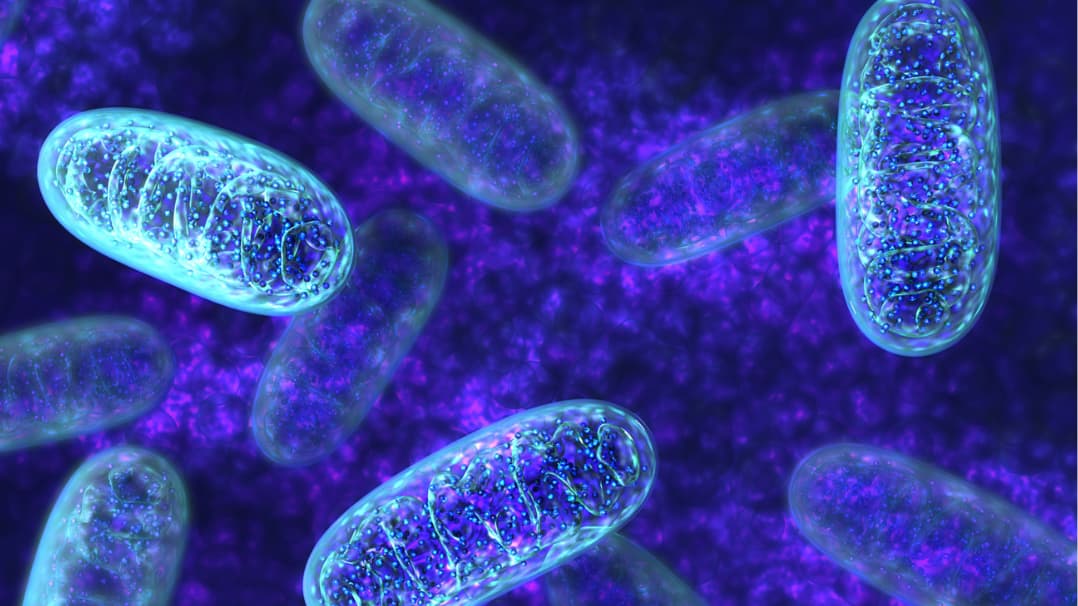
As we get older, our mitochondria — the tiny power plants inside every cell — start to lose steam. By the time people reach 80, muscle mitochondria are producing barely half as much energy (ATP) as they did in youth, leaving muscle fibers weaker, easier to fatigue, and slower to bounce back after exertion [1].
The brain takes a similar hit. Mitochondrial output falls by about 30%, so neurons still pull in fuel but can’t convert it efficiently into power [2]. That translates into less focus, slower cognitive processing, and diminished mental stamina.
As mitochondria stumble, both body and mind lose their edge. Much of what we think of as the usual wear of age traces back to a shared cellular crisis. Understanding why mitochondrial health matters makes it easier to see how these invisible cellular shifts turn into the very visible changes we associate with aging.
At the heart of this unraveling is a molecule called nicotinamide adenine dinucleotide (NAD⁺). It’s the cell’s metabolic middleman, the molecule that takes the raw energy from food and helps transform it into usable power. Every process that depends on mitochondria depends on NAD⁺.
And here’s the rub: NAD⁺ levels drop with age, which strains mitochondria and the systems that depend on them.
But there’s good news. A breakthrough nutrient called nicotinamide riboside (NR) has been shown in multiple human trials to reliably restore NAD⁺, recharging the body’s energy economy at its source.*
In this article, we’ll explore how NAD⁺ availability shifts with age, how NR how NR has been shown to restore it, and how next-generation formulations may carry that effect even further.*
NAD⁺: The Molecule That Keeps Your Cells Running
If mitochondria are the cell’s engines, NAD⁺ is the current that keeps them firing. Without it, energy production stalls.
This ancient molecule has two essential jobs.
First, it acts as a coenzyme, a molecular courier that keeps the cell’s energy economy flowing. Nutrients from food don’t just magically transform into energy. They’re broken down step by step through metabolic pathways, including glycolysis, the TCA cycle, and oxidative phosphorylation. At every phase, NAD⁺ is there to pick up high-energy electrons and deliver them to the mitochondria’s turbines, which spin out ATP [3].
So, NAD⁺ functions like a fleet of delivery trucks. Each factory along the route loads cargo, and the trucks haul it to the power station.
But that is only part of the story. NAD⁺ also serves as the raw material for enzymes that help cells stretch their energy and fend off stress. Chief among these are the sirtuins.
Sirtuins are a family of proteins that serve as the cell’s efficiency experts. Inside mitochondria, they fine-tune the machinery so each molecule of glucose or fat yields more ATP, the metabolic equivalent of squeezing extra miles from a gallon of gas. At the same time, they curb cellular “exhaust” — free radicals that accelerate wear and tear on mitochondria [4].
Much of what we know about sirtuins comes from animal models, where age-related decline in mitochondrial performance mirrors our own. By late life, energy output falls to about half of youthful levels, a drop linked to waning sirtuin activity [5]. As these enzymes lose momentum, mitochondria leak more oxidative byproducts and produce less energy [6].
So what would happen if sirtuins never lost steam?
Scientists at MIT decided to find out.
They engineered mice so that sirtuins stayed active in the brain throughout life. These mice lived longer (11% on average). But more than that, they aged differently.
By 20 months, when ordinary mice were slowing down, the experimental animals still had youthful vigor. Their oxygen consumption, body temperature, physical activity, even sleep looked more like that of young mice. Behind the scenes, sirtuins in the hypothalamus were sending signals that kept skeletal muscle mitochondria humming [7].
But here’s the catch: sirtuins only work if they have NAD⁺ to spend. Each reaction consumes it, leaving the enzymes exquisitely sensitive to the molecule’s ebb and flow.
And with age, the supply of NAD⁺ dwindles.
How NAD⁺ Decreases With Age — and Why It Matters
By the time you reach your 40s, NAD⁺ levels are already on a downward spiral, typically reduced by 30 to 40%. Fast-forward another couple of decades, and the supply may be cut in half [8].
For years, scientists wrote this off as background noise, a biomarker of age rather than a driver. But in 2013, a Harvard study comparing young and old mice challenged that view [9].
As mice got old, NAD⁺ levels⁺ in their muscle plummeted. Mitochondria sputtered, producing barely half as much ATP as in youth. The breakdown traced back to the same NAD⁺-hungry circuitry we’ve already met. With less NAD⁺ to spend, sirtuins went quiet. Without their steady hand, mitochondria let key parts of their energy machinery fall into disrepair. As a result, engines not only slowed but also ran dirtier, squeezing out less energy per calorie and leaving behind more metabolic waste. Supporting the body’s ability to process that buildup depends on an efficient detoxification reaction process, including healthy circulation, liver enzyme activity, bile flow, and elimination.
But here is where things get interesting. When old mice were given a precursor that refilled their NAD⁺ stores, the fog rapidly lifted. Within a week, mitochondrial activity and ATP production were restored to youthful levels in assessed tissues. For aging cells, it was a glimpse of what renewal might look like.
Which naturally raises the question: how could we bottle that effect for humans?
Nicotinamide Riboside: The Breakthrough NAD⁺ Booster
The obvious fix for falling NAD⁺ would be just to swallow more of it, right?
Trouble is, the molecule is too bulky and unstable to survive digestion. By the time it’s torn apart in the gut, there’s not much left that can meaningfully raise your levels [10].
So scientists turned to vitamin B3, the nutrient family that our cells use to make NAD⁺. The classic options do work, but they have their quirks when consumed in mega-doses [11]. Niacin, for instance, can raise NAD⁺, but large amounts elicit the infamous “niacin flush,” a wave of heat and prickling that most people can’t tolerate.
And here’s the other catch: when you flood the body with lots of B3, not all of it becomes NAD⁺. Much of it gets shunted into a clearance pathway, where it’s methylated — essentially tagged for disposal — and then flushed away in urine. That metabolic detour isn’t free. Methylation is the same process your body uses to keep mood-related neurotransmitters like serotonin and dopamine in balance, and to keep homocysteine in check. So burning through methyl groups just to dump excess B3 can steal resources from systems you really don’t want short-changed.
To see the way forward, it helps to step back and ask how the body normally keeps NAD⁺ topped up.
It's not from diet alone. Typical US adults consume around 15-25 mg of vitamin B3 per day. That is nowhere near enough to cover the relentless cellular demand for NAD+ [12]. Cells actually cycle through 6-9 grams of NAD⁺ every day, even though each cell only keeps a tiny pool on hand at any moment [13]. So how do they do it?
The answer is recycling. Most NAD⁺ isn’t generated freshly from food. It’s reclaimed via the salvage pathway [14]. Instead of fabricating NAD⁺ from scratch, cells recover fragments left over from daily metabolism and stitch them back together. Kind of like swapping in spare parts instead of rebuilding a whole car from raw steel.
That clue set the stage for a breakthrough.
In 2004, researchers zeroed in on an overlooked member of the B3 family: nicotinamide riboside (NR) [15]. Unlike niacin or niacinamide, NR feeds directly into the salvage pathway. Once inside cells, it’s picked up by dedicated enzymes called NR kinases, which convert it straight into NMN, the immediate precursor to NAD⁺. From there, it re-enters the same salvage loop that cells depend on to keep energy flowing.
In biology, a dedicated enzyme is like a flashing neon sign saying this pathway is super important. So when researchers spotted the very same enzymes in yeast and in humans, the significance clicked right away. This was a conserved express lane, preserved across billions of years of evolution, built to keep NAD⁺ flowing when energy and repair were on the line.
But it wasn’t until very recently that we got the opportunity to see what NR does in humans.
Human Trials: How Nicotinamide Riboside Raises NAD⁺
The first real test of NR in humans came in 2016. Charles Brenner and colleagues gave volunteers single doses of NR ranging from 100 to 1,000 milligrams. Even the lowest dose nudged NAD⁺ upward, and at the high end one participant nearly tripled his levels within a week [16].
What really clinched the finding, though, was a surge in a metabolite called NAAD.
Why does that matter? Normally almost invisible, NAAD only shows up when cells are actively making new NAD⁺. In this trial, it spiked more than 40-fold. That gave scientists not just a way to measure success, but confirmation that NR was actively fueling the salvage pathway.*
Follow-up studies confirmed the effect [17].*
Then, in 2018, middle-aged and older adults were given NR for six weeks [18]. NAD⁺ in immune cells climbed about 60%, accompanied by a rise in NAAD — that unmistakable fingerprint of repletion. Beyond raising NAD⁺, the trial found signs of vascular benefit. Over the course of the study, systolic blood pressure fell, in some cases by as much as 9 mmHg.*
The biggest test came in 2019 with 140 participants over eight weeks [19]. All raised blood levels of NAD⁺, but 300 mg emerged as a practical sweet spot, delivering a sustained 50% boost with a clean safety profile. The gains held steady for the full two months, and once again NAAD lit up as confirmation that the recycling pathway was humming.*
Study after study tells the same story: NR reliably raises NAD⁺ in humans, and does so at doses that are practical and safe for everyday use. That consistency across trials gives nicotinamide riboside the strongest human track record of any NAD⁺ precursor.*
But is NR enough by itself?
Redundancy by Design: Multiple Paths to NAD⁺
Biology doesn’t like to bet everything on a single card. When survival is on the line, evolution builds in fail-safes — overlapping systems to make sure the job gets done no matter what.
Take appetite regulation. Hunger isn’t run by one isolated switch. It’s a whole control board. Ghrelin surges from the stomach to spark cravings. Neuropeptide Y in the hypothalamus turns up the volume. Orexin in the brainstem keeps you restless and looking for snacks. And dopamine lights up the reward circuitry, making that bag of chips feel irresistible before you even tear it open.
Why so many voices in the mix? Because eating is non-negotiable. If one pathway glitches, the others kick in. Nature builds backups for the stuff that matters most.
NAD⁺ is treated with similar gravity. Instead of one entry point, the body uses a web of precursors — niacin, niacinamide, tryptophan, NR, NMN — all feeding into the same pool by slightly different routes.
To see this in action, a 2014 experiment tested what happens when animals are flooded with niacin and niacinamide at once [20]. If both had to squeeze through the same biochemical bottleneck, you’d expect a jam. But that’s not what happened. Niacin was mostly converted into one metabolite (nicotinuric acid), while niacinamide traveled down a completely separate road, producing N-methylnicotinamide and related compounds. In other words, the body sent them down distinct metabolic lanes.
That independence matters. Rather than funneling everything through one fragile route, the body can “split the workload,” keeping NAD⁺ production resilient.
And that redundancy is a clue. When biology preserves multiple independent lanes across evolution, it’s because the cargo is too important to risk on a single supply chain.
It also implies that if you want to maximally replenish NAD⁺, you don’t lean on one precursor alone.
The Smarter Stack: How Qualia NAD⁺ Maximizes Results
Nature doesn’t rely on a single lane for something this important, and neither should we. That’s why Qualia NAD⁺ was formulated to feed the system from multiple angles.*
Instead of putting all the pressure on one molecule, it delivers three distinct forms of vitamin B3: niacin, niacinamide, and nicotinamide riboside. Each one takes a different on-ramp into the NAD⁺ network, ensuring traffic keeps flowing no matter where the bottleneck might be.
Niacin feeds into the Preiss–Handler pathway, powered by enzymes that are especially abundant in the liver and kidney [21]. That makes it particularly suited for the body’s metabolic hub — handling nutrient processing and detoxification at the core of whole-body energy balance.
Niacinamide, meanwhile, takes a different route through the salvage pathway [22], which dominates in tissues like adipose and immune cells. Here it acts as the steady recycler, keeping NAD⁺ topped up where rapid turnover and signaling flexibility matter most [23].
Nicotinamide riboside also joins the salvage loop, but via its own dedicated enzymes, which give it a distinct “on-ramp” and an efficiency edge. NRK enzymes are strongly expressed in skeletal muscle, helping mitochondria crank out power for strength, endurance, and recovery [24].
And in the brain, neurons depend heavily on the salvage pathway, too — powered by an enzyme called NAMPT, which acts like the ignition switch in the cortex and hippocampus [25]. It’s what lets the brain rapidly replenish NAD⁺ when demands spike, supporting focus, stamina, and memory under pressure.
By splitting the workload, these pathways keep NAD⁺ production resilient. Supplying all three precursors means more coverage, ensuring the right raw material is available for the right cells, at the right time.*
And this isn’t just mechanistic speculation. We’ve put it to the test.
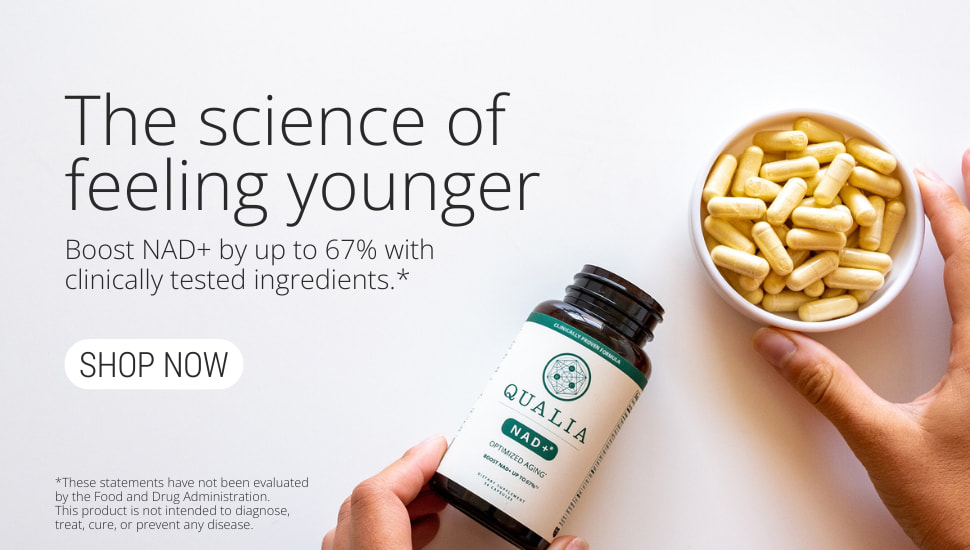
In a double-blind, placebo-controlled trial, participants taking Qualia NAD⁺ raised their NAD⁺ by an average of 67% in just four weeks.*
By stacking NR with niacin, niacinamide, and other key cofactors, the formula delivers what biology predicted: a smarter and more powerful replenishment of the body’s energy currency.*
*These statements have not been evaluated by the Food and Drug Administration. This product is not intended to diagnose, treat, cure, or prevent any disease.
References
[1] K.E. Conley, S.A. Jubrias, P.C. Esselman, J. Physiol. 526 (2000) 203–210.
[2] F. Boumezbeur, G.F. Mason, R.A. de Graaf, K.L. Behar, G.W. Cline, G.I. Shulman, D.L. Rothman, K.F. Petersen, J. Cereb. Blood Flow Metab. 30 (2010) 211–221.
[3] E. Katsyuba, M. Romani, D. Hofer, J. Auwerx, Nat. Metab. 2 (2020) 9–31.
[4] J.C. Milne, J.M. Denu, Curr. Opin. Chem. Biol. 12 (2008) 11–17.
[5] S. Someya, W. Yu, W.C. Hallows, J. Xu, J.M. Vann, C. Leeuwenburgh, M. Tanokura, J.M. Denu, T.A. Prolla, Cell 143 (2010) 802–812.
[6] R.A.H. van de Ven, D. Santos, M.C. Haigis, Trends Mol. Med. 23 (2017) 320–331.
[7] A. Satoh, C.S. Brace, N. Rensing, P. Cliften, D.F. Wozniak, E.D. Herzog, K.A. Yamada, S. Imai, Cell Metab. 18 (2013) 416–430.
[8] J. Clement, M. Wong, A. Poljak, P. Sachdev, N. Braidy, Rejuvenation Res. 22 (2019) 121–130.
[9] A.P. Gomes, N.L. Price, A.J. Ling, J.J. Moslehi, M.K. Montgomery, L. Rajman, J.P. White, J.S. Teodoro, C.D. Wrann, B.P. Hubbard, E.M. Mercken, C.M. Palmeira, R. de Cabo, A.P. Rolo, N. Turner, E.L. Bell, D.A. Sinclair, Cell 155 (2013) 1624–1638.
[10] J. She, R. Sheng, Z.H. Qin, Aging Dis. 12 (2021) 1879–1897.
[11] X. Li, H. Yang, H. Jin, H. Turkez, G. Ozturk, H.L. Doganay, C. Zhang, J. Nielsen, M. Uhlén, J. Borén, A. Mardinoglu, Free Radic. Biol. Med. 205 (2023) 77–89.
[12] Y. Yang, A.A. Sauve, Biochim. Biophys. Acta 1864 (2016) 1787–1800.
[13] A. Chiarugi, C. Dölle, R. Felici, M. Ziegler, Nat. Rev. Cancer 12 (2012) 741–752.
[14] E. Verdin, Science 350 (2015) 1208–1213.
[15] P. Bieganowski, C. Brenner, Cell 117 (2004) 495–502.
[16] S.A.J. Trammell, M.S. Schmidt, B.J. Weidemann, P. Redpath, F. Jaksch, R.W. Dellinger, Z. Li, E.D. Abel, M.E. Migaud, C. Brenner, Nat. Commun. 7 (2016) 12948.
[17] S.E. Airhart, L.M. Shireman, L.J. Risler, G.D. Anderson, G.A. Nagana Gowda, D. Raftery, R. Tian, D.D. Shen, K.D. O'Brien, PLoS One 12 (2017) e0186459.
[18] C.R. Martens, B.A. Denman, M.R. Mazzo, M.L. Armstrong, N. Reisdorph, M.B. McQueen, M. Chonchol, D.R. Seals, Nat. Commun. 9 (2018) 1286.
[19] D. Conze, C. Brenner, C.L. Kruger, Sci. Rep. 9 (2019) 9772.
[20] K. Shibata, T. Fukuwatari, C. Suzuki, J. Nutr. Sci. Vitaminol. (Tokyo) 60 (2014) 86–93.
[21] C.C.S. Chini, J.D. Zeidler, S. Kashyap, G. Warner, E.N. Chini, Cell Metab. 33 (2021) 1076–1087.
[22] A.J. Covarrubias, R. Perrone, A. Grozio, E. Verdin, Nat. Rev. Mol. Cell Biol. 22 (2021) 119–141.
[23] K.L. Bogan, C. Brenner, Annu. Rev. Nutr. 28 (2008) 115–130.
[24] T. Sonntag, S. Ancel, S. Karaz, P. Cichosz, G. Jacot, M.P. Giner, J.L. Sanchez-Garcia, A. Pannérec, S. Moco, V. Sorrentino, C. Cantó, J.N. Feige, Front. Cell Dev. Biol. 10 (2022) 1049653.
[25] X. Wang, Z. Zhang, N. Zhang, H. Li, L. Zhang, C.P. Baines, S. Ding, J. Neurochem. 151 (2019) 732–748.