 Written by
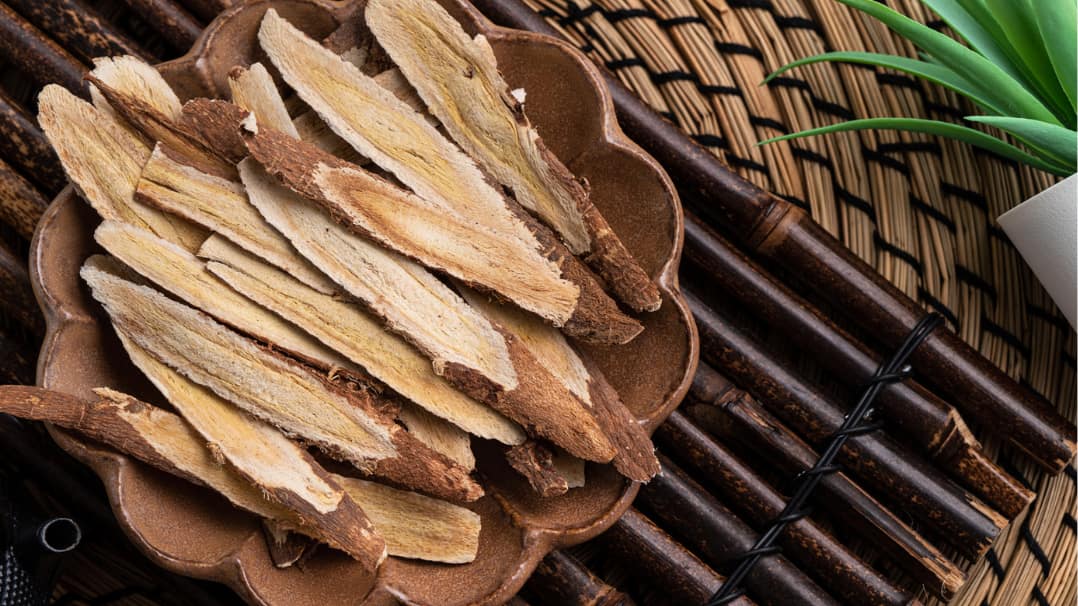
At a glance, it appears unremarkable. A fibrous root, pale and woody, usually dried into strips or ground into powder. But Astragalus membranaceus has been trusted for millennia. Not because it’s flashy, but because it’s steady.
In Traditional Chinese Medicine, astragalus earned its place as a tonic for strength and resilience. Today, scientists are beginning to understand why: this humble legume is a master of adaptation.
Astragalus grows in the grasslands and high plateaus of northern China and Mongolia. These are landscapes marked by dry soils, cold winters, and short growing seasons. In these sparse but stable conditions, the plant matures slowly, concentrating its power in the root.
That root has long been used to help the body recover from depletion, endure change, and maintain balance across internal and external shifts. And now, modern science is beginning to link those traditional effects with measurable biological pathways, from immune tone to stem cell behavior.* Viewed through this lens, astragalus becomes part of a broader strategy of stem cell support that helps the body maintain its capacity to repair and adapt with age.
In this article, we’ll explore how Astragalus supports true regenerative resilience: not by pushing the body harder, but by helping to sustain and replenish the reserves that make repair possible.*
Astragalus in Traditional Chinese Medicine
Long before we even had a name for stem cells, Astragalus membranaceus had already earned its reputation in Traditional Chinese Medicine (TCM) as a root of resilience.
In Traditional Chinese Medicine (TCM), it's called Huang Qi, or “yellow leader.” This name alludes to the root’s golden hue as well as its status as one of the most revered Qi-tonifying herbs in the pharmacopoeia [1].
To tonify Qi is to nourish the body’s core vital energy: the force that animates life from within and keeps its essential rhythms intact. When Qi is depleted, the system loses its capacity to adapt, leaving the body exposed and recovery uncertain.
Astragalus was used to rebuild that strength — not in moments of acute crisis, but rather during the long return that follows burnout or seasons of strain.
It was also said to strengthen Wei Qi, a subset of Qi that defends the body from external threats. Wei Qi circulates near the surface, guarding the skin and lungs, like a dynamic shield against external stress. In modern terms, we might call it immunological vigilance: the capacity to respond to challenges without tipping into overreaction [2].
Astragalus was never seen as a forceful herb. It didn’t push the system into action. Instead, it fortified the body's ability to respond. By restoring flexibility and reinforcing boundaries, it helped the body stay centered through change. Less a wall than a buffer, it offered strength through adaptability.
That traditional framework now finds echoes in systems biology. Researchers are gradually mapping these age-old effects onto specific biochemical interactions, such as immune calibration, cytokine modulation, and even stem cell signaling [3].* What TCM characterized as Qi, we might now understand as a flow of regenerative potential.
The Chemistry of Adaptation
Astragalus membranaceus works more like a translator than a commander, helping the body listen better for signs of stress and to opportunities for repair.*
Its strength lies in supporting internal communication. In TCM, this would be part of its role in restoring balance and coherence to Qi — strengthening the body’s external defenses, but also its ability to interpret the world accurately and respond with precision.
Modern science has traced much of this effect to two key groups of compounds: saponins and polysaccharides [4]. Together, they form a regulatory toolkit, modulating immune tone, refining signal sensitivity, and helping build the conditions in which regeneration can unfold.*
Saponins: Bridging Two Worlds
The word “saponin” comes from sapo, the Latin word for soap — a nod to how they create foam when mixed with water.
This propensity offers a hint at their chemical personality. Saponins are amphipathic molecules. That means they contain two contrasting regions in the same structure. One part is hydrophilic, meaning it mixes easily with water, and the other is lipophilic, meaning it blends with fats. That duality allows them to cross boundaries that most molecules cannot, moving seamlessly between blood and cell membranes.
Cell membranes are where cells interpret the world. Stress, inflammation, and damage all register here through an array of receptors. Saponins can embed themselves in these membranes and subtly alter the tone of those conversations.
This becomes especially important during tissue repair, when timing and clarity of signaling can determine the outcome. Saponins help ensure that cells don’t overreact, misfire, or miss the call entirely.
But membranes are just the beginning. For regeneration to fully unfold, messages must also travel between cells, especially across the immune system.
Polysaccharides: Immune System Conductors
While saponins work at the cellular edge, astragalus polysaccharides operate across a wider network. These long, branching sugar chains interact with key players in the immune system — especially macrophages and natural killer cells — acting as adaptive conductors of immune tone [5].*
These polysaccharides don’t simply switch the immune system on or off. Instead, they help it read the room. In quiet conditions, they may heighten baseline vigilance. But when inflammation is already elevated, they can help bring the system back toward the center.*
This ability to adjust in both directions — known as bidirectional modulation — is a cornerstone of TCM herbal theory [6]. Astragalus isn’t pushing the immune system toward stimulation or suppression. Instead, it’s restoring its capacity to self-regulate, just as it does with Qi.*
Together, saponins and polysaccharides form a kind of adaptive infrastructure. One operates at the interface of the cell; the other weaves through the body’s internal defenses.
But before regeneration can begin, there must first be recognition. And that depends on tone.
Immune Tone: The Gateway to Regeneration
The immune system is the body’s first translator of stress. And in no other system is astragalus’s intelligence more evident.*
Repair begins with recognition: a signal that something has changed. That signal often starts with the immune system.
Here, astragalus polysaccharides play a subtle but crucial role.
In low-stress environments, they have been shown to raise levels of intracellular messengers like nitric oxide and cyclic AMP. In doing so, they keep macrophages, our key immune sentinels, alert and responsive [7].*
But in inflamed conditions, macrophages respond differently to astragalus polysaccharides. Instead of amplifying the alarm, they begin to quiet it, reducing inflammatory cytokines like TNF-α and IL-1β and turning down upstream pathways such as NF-κB, ERK, and JNK [8].*
This kind of contextual adjustment is key. Too little immune activation, and repair never starts. Too much, and stem cells may get lost in the noise. Astragalus keeps the volume just right.*
It’s this poised state, ready but not unduly reactive, that lays the foundation for regeneration to begin.
Astragalus and the Immune–Stem Cell Dialogue
Macrophages are more than first responders. They’re transitional agents, bridging the shift from inflammation to repair. Once the immediate threat is contained, they change their output, releasing signals that tell stem cells: it’s time to rebuild [9].
Astragalus supports this shift. Its polysaccharides help temper lingering inflammatory noise while promoting pro-repair cues, allowing macrophages to guide stem cells with clarity.* This handoff is delicate, but essential. When it’s well-tuned, regeneration can proceed with precision.
But immune tone alone doesn’t complete the picture. Once the message has been received, the body still needs to send the call: the chemical signal that mobilizes the repair crew.
Calling in the Crew: Astragalus and Immune-Led Regeneration
Once immune tone is set, the body’s next move is to issue the call: the signal that tells repair systems it’s time to mobilize.
A key signal in early tissue repair is a molecule called granulocyte-macrophage colony-stimulating factor, or GM-CSF. GM-CSF is a cytokine, a type of chemical signal that helps coordinate immune responses.
When released, GM-CSF acts as an alert: it tells immune cells to converge on the site. Just as importantly, it helps shape the biochemical environment around stem and progenitor cells, nudging them out of dormancy and encouraging them to divide, migrate, and rebuild.
Without this kind of upstream coordination, stem cells may never receive the signal to act, regardless of their number or potency.
In a laboratory model of bone marrow suppression, researchers found that astragalus polysaccharides stimulated stromal cells — the scaffolding cells of the bone marrow — to produce significantly more GM-CSF [10].*
These stromal cells are like local coordinators. They shape the microenvironment where stem cells reside, deciding when to hold them in place and when to release them into action. By supporting these coordinators, astragalus amplifies the internal call for help, enhancing the signals that initiate regeneration.*
Notably, this wasn’t indiscriminate stimulation. The response scaled with need — a hallmark of contextual modulation, and consistent with astragalus’s broader role in Traditional Chinese Medicine.
But even a mobilized stem cell can’t do much without access. Regeneration also needs infrastructure.
Building the Highway: Astragalus and Circulatory Signaling
Even when stem cells are primed to act, they can’t do much without access. Regeneration depends on communication, but also on logistics. Oxygen, nutrients, immune messengers, and growth factors must all reach the repair site in time and in the right proportion.
That delivery system depends on blood vessels. And the signal that drives their growth is vascular endothelial growth factor, or VEGF, a molecular message that tells the body to lay down new routes. This process, known as angiogenesis, builds the microvascular network that supports healing tissue.
But blood vessels do more than supply fuel. They also help direct the repair process. Stem cells reside in structured microenvironments called niches, many of which are closely associated with the vasculature. Endothelial cells, which line the interior of blood vessels, secrete biochemical signals that help determine whether a stem cell stays dormant, divides, or begins to specialize [11].
Here, Astragalus membranaceus proves its versatility.
In a rodent model, treatment with astragalosides (saponins found in astragalus) boosted levels of VEGF in damaged tissue, leading to a denser network of new microvessels and healthier repair architecture [12]. Another experiment, using a similar model, found that treatment with an isolated astragaloside (astragaloside IV) boosted angiogenesis by unlocking the genetic switchboard that controls VEGF production. It activated a signaling cascade (PKD1-HDAC5-VEGF) that lifted brakes that normally keep VEGF quiet, enabling endothelial cells to kick off their vessel-building program [13].*
By supporting vascular regeneration, astragalus both improves access and also shapes the context in which stem cells operate. More than just opening roads, it helps build the landscape through which stem cells receive their cues.*
But even when the roads are built and the crew has arrived, there’s still the question of what to do first. Should the crew call in reinforcements to ensure enough hands for the job, or begin the work of rebuilding right away?
Building the Reserve: Astragalus and Notch Signaling
Stem cells do not rebuild tissue continuously. They spend most of their lives in reserve, poised for the right cue. One of the key systems guiding that decision is the Notch pathway — a network of receptors on the cell membrane that influence whether a cell stays quiet, multiples, or begins to specialize.
Notch’s role is nuanced. In many contexts, strong Notch signaling encourages stem cells to proliferate, meaning to make more copies of themselves while remaining undifferentiated. This expands the pool of available cells, ensuring that the body has reserves for future repair or to actively participate in tissue renewal. When Notch activity decreases, by contrast, some of those cells receive the signal to differentiate, meaning to commit to a specific role, like becoming a neuron, a muscle fiber, or a skin cell.
Both paths are essential. Without proliferation, the supply of stem cells would dwindle. Without differentiation, tissue repair would never occur. The balance between these states determines how regenerative capacity is preserved over time.
Astragaloside IV, a well-characterized saponin from Astragalus membranaceus, has been shown in animal models to influence this system. In a preclinical study on neural stem cells, the saponin was shown to activate the Notch pathway in a manner that supported proliferation. Neural stem cells treated with the compound expanded in number and survived longer. By amplifying this “hold and multiply” signal, astragaloside IV helped enlarge the pool of cells available for repair, ensuring more stem cells would be ready when the body called upon them [14].* This effect may stem from the saponin’s amphipathic nature — its ability to integrate into the cell membrane, where Notch receptors reside, and shape how those signals are received.
In Traditional Chinese Medicine, this could be said to reflect the principle of preserving Jing, the body’s core essence. Jing is thought to underlie resilience and regenerative capacity across a lifetime. Just as Jing must be cultivated and guarded to maintain vitality, stem cells benefit from signals that expand their reserve without draining it. Astragalus, in this respect, may help build a deeper well of regenerative potential.*
The more robust the stem cell reserve, the more capacity the body has to respond to stress, repair damage, and sustain vitality across a lifetime. But expanding the stem cell pool is only useful if those cells can be preserved. That preservation depends on quiescence.
Why Stem Cells Need Sleep
Quiescence is not a flaw in the system. It's a feature.
Far from passive, this resting state protects the regenerative pool by lowering metabolic stress, preserving genomic integrity, and maintaining long-term potential. Researchers have referred to quiescence as a “sleeping beauty” state, not because the cells are idle, but because their stillness is deliberate [15].
In this phase, stem cells suppress unnecessary activity: minimizing DNA replication, reducing protein synthesis, and resisting oxidative and inflammatory damage [16]. Meanwhile, they remain fully capable of reawakening when the right signal comes.
But when that rest is denied — when stress lingers or repair signals remain elevated — the system begins to wear down [17]. Chronic stimulation may lead to stem cell exhaustion: cells burn out, differentiate prematurely, or enter senescence. The regenerative pool shrinks, and healing slows.
This is why a rhythm of activation and rest is essential.
Adaptation, Not Activation
Astragalus membranaceus has always been an herb of discernment.
In Traditional Chinese Medicine, it wasn’t used to stimulate indiscriminately, but to strengthen Qi, restoring the body’s ability to respond with clarity. Modern science is uncovering the same intelligence, written in a different language.
Astragalus supports the checkpoints that preserve balance across the regenerative process. It influences inflammatory tone, helps coordinate immune–stem cell communication, and shapes the repair environment. It reinforces the expansion of the stem cell pool, helping ensure that reserves are replenished before they’re called upon for repair.*
And that balance matters.
Because the stem cell pool is like a retirement account for healing. With careful use, it supports resilience across a lifetime. But if the system spends too freely, that account begins to drain. Eventually, when the real need for repair arises, there’s less left to respond.
That’s why astragalus is part of the Qualia Stem Cell protocol — and why the protocol itself is designed around restraint.* Learn more about the Qualia Stem Cell ingredients.
This isn’t a daily supplement meant to keep stem cells constantly “on.” It’s a 4-day intervention, done just once per month. In effect, it elicits a regenerative pulse, followed by rest. That rhythm is intentional: it mirrors the body’s own cycles of renewal and helps preserve the integrity of the stem cell pool.*
In this system, astragalus is able to shine at what it does best: expanding the body’s regenerative reserve in harmony with the rhythms that sustain it.*
*These statements have not been evaluated by the Food and Drug Administration. This product is not intended to diagnose, treat, cure, or prevent any disease.
References
[1] Z. Chen, L. Liu, C. Gao, W. Chen, C.T. Vong, P. Yao, Y. Yang, X. Li, X. Tang, S. Wang, Y. Wang, J. Ethnopharmacol. 258 (2020) 112895.
[2] P. Liu, H. Zhao, Y. Luo, Aging Dis. 8 (2017) 868–886.
[3] K.K. Borowicz, M.E. Jach, Nutrients 17 (2025) 1299.
[4] S. Li, X. Hu, F. Liu, W. Hu, Front. Pharmacol. 16 (2025) 1585697.
[5] M. Jin, K. Zhao, Q. Huang, P. Shang, Int. J. Biol. Macromol. 64 (2014) 257–266.
[6] X. Peng, F. Tang, Y. Yang, T. Li, X. Hu, S. Li, W. Wu, K. He, J. Ethnopharmacol. 298 (2022) 115578.
[7] Z. Wang, Z. Liu, L. Zhou, T. Long, X. Zhou, Y. Bao, Int. J. Biol. Macromol. 94 (2017) 283–289.
[8] X. He, J. Shu, L. Xu, C. Lu, A. Lu, Molecules 17 (2012) 3155–3164.
[9] J.D. Manneken, P.D. Currie, Development 150 (2023) dev201510.
[10] X.L. Zhu, B.D. Zhu, Phytother. Res. 21 (2007) 663–667.
[11] Z. Li, Stem Cell Res. Regen. Med. 7 (2024) 155–156.
[12] J.M. Yu, X.B. Zhang, W. Jiang, H.D. Wang, Y.N. Zhang, Mol Med Rep 12 (2015) 6718–6726.
[13] L. Yang, N. Liu, W. Zhao, X. Li, L. Han, Z. Zhang, Y. Wang, B. Mao, Exp. Ther. Med. 17 (2019) 2511–2518.
[14] H. Haiyan, Y. Rensong, J. Guoqin, Z. Xueli, X. Huaying, X. Yanwu, Evid. Based Complement. Alternat. Med. 2016 (2016) 3106980.
[15] J.V. Gray, G.A. Petsko, G.C. Johnston, D. Ringe, R.A. Singer, M. Werner-Washburne, Microbiol. Mol. Biol. Rev. 68 (2004) 187–206.
[16] M. Rumman, J. Dhawan, M. Kassem, Stem Cells 33 (2015) 2903–2912.
[17] C. López-Otín, M.A. Blasco, L. Partridge, M. Serrano, G. Kroemer, Cell 186 (2023) 243–278.