 Written by

If you've ever wondered how to unlock your body's innate ability to heal and regenerate, this episode is a must-listen. Dan Pardi joins Sachin Patel to dive into the groundbreaking science behind stem cells and how to boost your metabolic health, especially after 40. We also touch on how to boost longevity with stem cell strategies that support long-term repair, resilience, and graceful aging beyond just metabolic health.*
Discover the fascinating life cycle of stem cells, why they are vital for gracefully navigating the aging process, and the truth behind stem cell exhaustion (and what you can do about it). Dan breaks down the 12 Hallmarks of Aging and explains why approaches like the targeted, periodic use of the Qualia Stem Cell supplement and senolytics might be the most effective way to support your body's repair systems. Is more always better? We explore the surprising power of "less is more" when it comes to activating your body's regenerative pathways.
Plus, hear a unique personal story about combining stem cell therapy with an Ayahuasca journey, and learn a powerful protocol for stacking stem cell support with senolytics for maximum benefit. Tune in to become a better steward of your own health journey and find out how you can start making the most of your body's incredible regenerative capacity.
Listen to the podcast here
Using Stem Cell Supplements to Boost Metabolic Health
Dan Pardi, how are you, my friend?
I'm doing great, Sachin. Thank you for having me here. I am looking forward to our chat. Thanks for taking some time.
I'm excited. Looking at your bio, you have a very diverse background. It seems like you lived many lifetimes in this lifetime. What is lighting you up the most right now about health and wellness?
That's a big question and a great one. The answer to that question will be different in a couple of weeks, and it was a few weeks ago. What that indicates is that generally, there are so many things to learn, understand, and focus on. I do have areas that pop up and are interesting for me. I then dig into those. I try to understand the details. I always try to link that back to larger principles and a bigger understanding, because it's difficult to infer a complete or improved understanding of health just through detailed memorization. It's good to know some details, but the harder work, oftentimes, but the most enriching and rewarding is then trying to think about the wisdom you can get from the data at hand, and how that feeds into the bigger picture.
I've realized that I've done a lot of things in my career, but what probably interests me most is being a health philosopher, thinking about the bigger picture. Why are we doing this? That can be from an overall health practice or very specifically about a specific task or activity. That's a fun way to interact with health, but it'll certainly be a lifetime of hard and interesting questions and challenges. At the moment, I would say stem cells, because this is a newer product for our company and me. It's giving me a great opportunity to dive deeper into this subject than ever before, which is enriching. I'm grateful for that opportunity, too.
Personal Experience With Stem Cells And Ayahuasca, Philosophy On Patient Empowerment
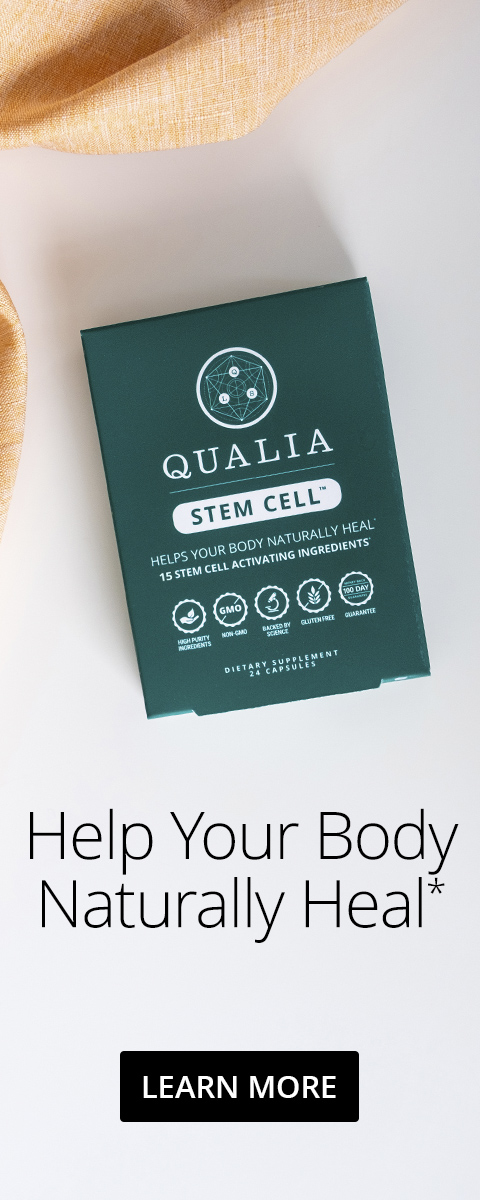
Stem cells are very relevant to me right now as well. It's something that I've experienced for myself. I went down to Costa Rica. I did a clinical stem cells. I had those injected into me. That was a pretty unique experience right after an ayahuasca journey. I did ayahuasca for four days in a row. On the fifth day, I did stem cells. I was being reborn spiritually, emotionally, and physically, all the way down to my regenerative capacities. I have also been taking stem cell supplementation. I've tried the Qualia Stem Cell as well. It’s right up my alley in terms of what's alive for me right now, as well.
We all want to be young. We all want to be healthy for as long as we possibly can. Stem cells are proving over and over again to be a viable path for that. Speaking of philosophy, my philosophy, and it perhaps aligns with yours as well, is that the doctor of the future is the patient. With all of these things that are coming to the forefront, whether it's PRP, stem cells, or even peptides, we're using compounds to enhance our own body's function. The body is doing all the work. We're just providing it with the environment and the instructions that it needs in order to do that. It is very much in alignment with my philosophy on health and the belief that nothing can fix us better than we can fix ourselves if we provide our body with the right environment and conditions for that to happen.
Sachin, we could spend the entire hour talking about that idea right there. That's such a rich one. We do play a huge role in our own health. Encouraging people to embrace that idea is important because the trends, the movement, or the energy in modern healthcare has been that we outsource this. Don't think about it. Let the experts treat you. They have an important role, but it's far from complete. There will be no more important person than you in navigating your own health journey. It can feel daunting at times because you might not be a scientist. You're a lawyer. You're a school teacher. Whatever you do, it can feel like there's so much that I need to learn in order for me to be a good steward of my own journey in health.
We also have a lifetime to try new things to figure things out. I encourage people to also pay close attention, become great listeners to what's happening inside of you, and figure out what works for you. You are a very unique individual. There is no other version of you elsewhere in the entire universe. You have that opportunity now to take in the intellectual learned knowledge side, which is always increasing your experiential side, and put that together constantly throughout life to try to have a greater impact on the path that you walk and have that be beneficial to your health. I highly encourage people to think of it that way. For all readers out there, kudos to you for paying attention, for following the story, and for being curious.
Stem cells have come a long way in terms of how we can access them and things that we can do to increase our own stem cell production. For the person who is new to this conversation, maybe we can approach this from a beginner's mind perspective. What exactly are stem cells? Why are they vital for healing, repair, aging, and all the things that we want when it comes to vitality?
Definition And Vital Role Of Stem Cells For Healing, Repair, And Aging
I'm glad that we're we are starting from the beginning because if you're telling a story, you don't want to skip over the foundational parts of that story. Otherwise, the rest of it will be disadvantaged in terms of making sense. Stem cells are special cells in the body that can make copies of themselves and turn into other types of cells. They can duplicate and make a copy of themselves, and then another cell that then integrates itself into your tissue, a heart cell, a brain cell, or an immune cell circulating in your blood. This is how our body will regenerate itself from when we're born to when we die.
It's a major part of our repair system. What they do is replace worn-out and damaged cells. Our cells will exhaust themselves and die, but we need to replace that tissue. They can supply any type of cell that is needed, depending on the context. That is what they are. I've always been interested in where things come from. What is the origin? To do that, we can look to see how stem cells even evolved. This is a story that I particularly love. We sometimes talk about human evolution as being 200,000 years old. Some will go back to two million.
Human evolution starts with the beginning of life on Earth, because we descended from the beginning of life. For the first three billion years, there were no stem cells. These are just cells that were dividing and living independently, and doing very important things. They were working on creating maximal internal efficiency that then enabled multicellularity. Multicellularity is where cells come together.
At first, they worked as a fleet of independent cells, but they would share information back and forth with each other through communication cues, so they could read the metabolic state of the cell next to them. Over the next couple of 100 million years, we started to see special cellular specialization, where not only did cells group together, but they started to take on different roles. Instead of all of us, if we're cells doing the same thing, it's a divide and conquer strategy. You do certain tasks. I'll do others.
That's the beginning of tissues. In that process, you now have something called differentiation. Cells have to differentiate and take on unique functions. Once organisms had specialized cells, they needed renewable pools of undifferentiated cells. Undifferentiated means they haven't become anything yet to replace the specialized cells that have died off. That's where stem cells emerged into existence. This concept is ancient. It's basically an evolutionary tool for managing the complexity of living organisms.
The visual I'm getting is a stem cell sending its little stem cell baby off into the world, patting it on the head, and saying, “You can be anything you want to be,” like a little cartoon meme. It sounds like science fiction, but it's obviously not. This is a big chunk of the work that you do at Qualia. Other organizations are diving deep into the research. This is a very key area of interest as we want to slow down the aging process or age gracefully.
Some people are trying to age backwards. Some people are trying to never die. Some people want to live to 180. Wherever you fit into that spectrum, as you're reading this, stem cells can be very beneficial for you because they can significantly improve your quality of life and help you age gracefully. There are twelve hallmarks of aging. We don't have to get into all of them. How do stem cells tie into the hallmarks of aging?
Different Types (Potency) Of Stem Cells And Their Function
Before I even get there, maybe I can introduce some additional characteristics because we will talk about different types of stem cells. There isn't just one type. This will be foundational to us when thinking about the hallmarks of aging. I can talk about those because that's fascinating. You will hear stem cells defined based on their potency. Potency is a word that describes what they can become. I love your visual. I picture two parents with a little kid and a lunchbox and saying, “Go differentiate. Figure out who you are in this world.”
To play on that analogy, when you're very young, you can become anything. If you're a zygote, you have what's called totipotency. That means that you can become any cell in the human body. What is more common, the term that we heard is pluripotency. For all intents and purposes, a totipotent cell and a pluripotent cell can both become anything. Yes, there are some unique differences. Pluripotent cells cannot become extraembryonic tissue, like the placenta. We don't need to go down that rabbit hole. It probably confounds the understanding of the situation.
Overall, there are five main categories of potency. Totipotent and pluripotent cells can become anything. Imagine your child has made it into high school. They've started to take classes based on their interest. They're interested in science. We're going to use that because I love science. They start to take classes. Instead of taking history and law, they're using all their elective time, and they are starting to specialize. That is equivalent to other types of potencies: multipotent, oligopotent, and unipotent. Those types of cells have now started down a path of differentiating.
They can't become anything, but they're more likely to do a very good job at certain tasks that we need. They can become multiple types, but only within related lineages. An example is a hematopoietic stem cell or an HSC. Those are common in clinical medicine, especially in relation to stem cells. They can differentiate into different types of blood and immune cells. The lineages are myeloid and lymphoid. If you are not familiar with those terms, the myeloid lineage simply means that it can produce red blood cells, platelets, monocytes, and types of granulocyte-based cells like neutrophils, basophils, and eosinophils. It's making blood cells. The myeloid lineage is a line that is based on hematopoietic stem cells that make blood cells.
The other line is the lymphoid lineage. That's making immune cells, B cells, T cells, and natural killer cells in the immune system. Another example of a multipotent stem cell is mesenchymal stem cells. The two that you hear most about are hematopoietic stem cells and mesenchymal stem cells. They can become various forms of connective tissue, like bone, cartilage, fat, and even muscle. You have oligopotent cells. They can only become a few related stem cell types. An example would be an osteoprogenitor cell. They're restricted to just making bone, like osteoblasts and osteocytes.
Lastly, you have unipotent stem cells. They can become only one type of stem cell, but they can still self-renew. Remember that stem cells do two major things. They self-renew, they make a copy, and they make a cell destined to become the child going off into their career. A good example of that would be a muscle satellite cell. As you can see, you have different types of stem cells in the body. All of which can self-renew and differentiate. Some types can differentiate into more cells. Some types of that can differentiate into anything. Others can only differentiate into one thing.
Hopefully, that will give you a better sense of what stem cells are doing. I hope this isn't too much, but I love looking into the idea of differentiation. We know we can copy itself, but what does actual differentiation look like? Sometimes, it could feel like too much information. When I'm looking into a new area, it helps ground me in like, “I can see the full circle process here.” You now have the stem cell. It's undifferentiated. It can become different things. It is triggered by these external cues, like growth factors, cytokines, signals from the extracellular matrix, and even physical forces.
Movement of your muscles can trigger signals that will then tell a stem cell how to differentiate. How? All of these signals, cytokines to movement, are going to then activate signaling pathways. Signaling pathways have very funny names, like Wnt, Notch, Sonic Hedgehog. By the way, these are ancient. These go back to 600 million to 800 million years ago. They had been with us since the beginning. These are ancient pathways. These extracellular signal pathways then trigger a biochemical cascade that happens inside the cell. External forces are now shaping what's happening inside the cell.
What they do is that they can influence transcription factors. A transcription factor is a protein that binds to specific DNA sequences and can turn a gene on or off. They can control which proteins a cell makes. Remember, all of our cells have all of our genetic information, but we don't want our muscle cells to be making neural tissue or fat tissue. We want our muscle cells to make muscle tissue. That is how this process works. External factors drive signaling cascades. They affect transcription factors that affect genes. Those genes make this kind of cell specifically.
That's how that works. Once it's differentiated, once a cell now has all those signals and it's only making muscle protein, then epigenetics will come in. They'll stabilize the cell's fate. Unused genes are silenced. That will further lock in its identity. All of this is reinforced with these biochemical loops that then help to suppress the alternative. That's propitious for us humans that have hundreds, even maybe thousands, of different cell types. We want all of those cell types performing specific goals and functions. This process that I described enables this differentiation that I described to occur. That's how a stem cell, a mold of clay, a little child, becomes something highly functional within the context of our 38 trillion cells.
Thank you for sharing that. Does this process ever go haywire or wrong? If it does, what are some of the consequences of that?
Yes, it can. If you think about it, you have these cells that are reproducing. There is some interesting evidence that your stem cells can even outlive their host. We are the host that they have, in a sense, an immortality to them. Don't get me wrong. They can aggregate issues that would cause problems in how they differentiate. For example, some problems that could go wrong would be dedifferentiation, that all of the processes that I described that help a cell not only become something specific, but lock into that state, go haywire. You have now dedifferentiated into something that is less specific.
That can be manipulated. Biotechnology is trying to use dedifferentiation in order to then create a pool of cells that could become new tissues, because as we get older, we do experience what's called stem cell exhaustion. Our body is less good at making new tissue. That's something that we can talk about with the hallmarks of aging. Another problem is cancer. If your body is not regulating this process well, then you will have a condition where there is excessive proliferation. There are issues that can occur. That's why we want to have a highly functional stem cell system throughout the body.
What are some things that can disrupt that system or cause it to not function optimally? I'm sure there's a variety of them, like environmental, nutritional, mental, emotional, and trauma. I'm curious how much these other factors play a role. What can we do? I'm sitting here thinking, “What am I doing to take care of my stem cells?” We look at ourselves in the mirror. We take care of our organs and our musculoskeletal system, etc., but what can we do to take better care of our stem cells?
Factors That Disrupt The Stem Cell System And The Connection To The Hallmarks Of Aging
A good model to understand this is aging itself, because we do experience stem cell exhaustion. That is a decline in their ability to self-renew and generate functional cells. It's a great model to understand your question exactly. How can things go wrong, and possibly, what can we do about it? First of all, you're right. There are some theories that a major driver of aging is related to stem cells because your body is simply not repairing itself once the decline begins.
That's why stem cell exhaustion is one of twelve hallmarks of aging. To give you an overview of the hallmarks of aging, it's a model that was put forth by a group of five researchers in 2013. They published a report in the journal Cell. It transformed the industry. It's now one of the most cited publications in all of Cell. It basically categorizes at first nine different hallmarks of aging, of which stem cell exhaustion is one of them.
A decade later, that same group published three more hallmarks and some categorization of those different hallmarks. There's a lot to discuss there. It might be overwhelming to go through it all. No model is perfect, but some are useful. Some of us look at hallmarks of aging as an unassailable truth about what's going on. The way that I look at them is that these are probably not drivers of aging, but they are more proximal observations that reliably occur during the aging process.
What do I mean by that? Is there anything upstream of these hallmarks of aging that is then driving this reliably observed tissue damage? Evolutionary biologists would claim that there are not nine hallmarks of aging. There are not twelve. There are hundreds. There are so many different ways that we can observe reliably something that does occur with aging. Still, with that caveat in place, this hallmark paper has been very useful.
I am glad to see the work continue in that space. Don't be surprised when other hallmarks are introduced and offered. Even stimulating debate can be a wonderful thing for science. It gets people thinking, and then hopefully, it can also turn into interventions. That's about the hallmarks of aging. Let's go back to stem cell exhaustion, which is one of the nine original and now twelve. There are even others that are on the horizon that have been offered.
When it occurs, stem cells lose their ability to divide and regenerate, whether it's from overuse, demanding too much of your stem cells, aging, or damage like radiation. Think of it like a rechargeable battery. It has been recharged too many times. We know that with rechargeable batteries, after you've recharged them for a couple of years, they don't hold the same charge that they did when you first bought them.
Your phone, for example, the battery runs out faster.
I have not watched the Apple event talking about the iPhone 17, but I need it. I need to do one because my phone runs out of battery before the day is over. It's particularly apropos. That's an imperfect analogy, but it's still helpful. Once they're drained, they lose their power to help facilitate tissue repair. Some of the main drivers of this are chronic inflammation. It disrupts the cellular niche. A niche is the place in which a stem cell lives, particularly at the beginning of its life.
We know inflammation is a dirty word, but the truth is inflammation plays a critical role in our health. We don't want the absence of inflammatory markers. What we care about is inflammatory balance. Due to a variety of reasons, for instance, with more time on Earth, not only the aggregation of damage, but aggregation of damage of the repair systems meant to clean up the damage. Imagine this visual. You have a room with some leaks in it from the ceiling. You have mops. The mops are helping to clean up the leaks. With age, you have more leaks coming out of the ceiling, but you also have mops that are broken. There are less good. You're getting it from both sides. That's a good way to think about this.
This chronic inflammation provides important signals for both to support renewal and differentiation, as we were discussing earlier. For example, in aged muscles, when a satellite stem cell becomes a muscle cell when it's exposed to inflammatory markers like IL-6 or TNF-alpha, typically, they cause differentiation into myoblasts too early. Myoblasts are muscle precursor cells. It's part of the differentiation process into fully active muscular tissue.
What ends up happening is that those satellite cells can differentiate, but they can't self-renew. There's a part of this process where chronic inflammation is disrupting the normal self-renewal and differentiation process. Yes, we do okay for a little bit with some continual differentiation, but we're not also causing renewal. A critical part of healthy stem cells is their ability to renew. Instead of renewing, they fuse into fibers. This reduces the stem cell pool and impairs future generations. That's one thing, inflammation.
Another thing is oxidative stress. It is an inevitable part of our metabolism. When we understand how energy is made from the food that we eat and the air that we breathe, that oxidative stress is a part of that entire process. Aging modalities that look to try to extinguish all oxidative stress ended up causing more harm than good because we also need those signals. Everything in our body is on these feedback loops.
If you take one part of that feedback loop away, the cell can collapse in some unfortunate fashion. That's the same thing with oxidative stress. At the same time, oxidative stress is a major driver of DNA damage. That will trigger arrest, apoptosis, and then the reduction in stem cell pools. With each division, we see the telomere shorten. That limits the replication capacity and pushes cells into senescence. You can see now epigenetic drift and mitochondrial dysfunction.
There are all sorts of things that are occurring. Each of those has a contribution to limiting the overall efficacy of our stem cells. By the way, this is all bidirectional. There is no singular cause of aging. It's as though the entire stew, the soup that we are, ends up having an increasing number of problems. The real goal and interest is how we push that off so that these problems that are occurring are happening later in the lifespan.
The good news is that you can do remarkably well, especially if you are making comparisons to the average in modern living societies. You can be somebody who is in their 70s and 80s and doing shockingly well when you employ some of these strategies, a lot of which come down to lifestyle. Some of these exciting new healthspan interventions, like things around stem cells, are now coming into the fore as possibilities for maybe even doing better than somebody who is paying a great deal of attention to their lifestyle.
Inflammation is a huge part of what we work on addressing with our clients. Quenching their inflammation, not completely suppressing it, but excess inflammation is what we're trying to get at here. Excess oxidative stress is exactly what we help our clients with. It's great to know that that's going to help them create healthier stem cells for a longer period of time. For somebody who is maybe wondering or scratching their head, how do I know if my stem cells are becoming exhausted? What are some of the early signs or even later signs that they might be experiencing that?
Subjective And Objective Signs Of Stem Cell Exhaustion
We start to see stem cell decline in a very non-obvious way, even in our 30s. You can feel it more in your 40s. You might start to see some graying of hair. You might start to see some wrinkling of skin. The only reason that these things are occurring is the noticeable signs of aging because we are not regenerating tissue, even though there's damage that's happening always, by living. It's now outpacing our ability to create a net neutral situation where what we regenerate completely replaces the forces that drive loss. People will notice aches in their joints.
They wake up in the morning, and they're stiff versus feeling lubricated and limber. The mental side is harder to assess. Some people will notice loss of memory, but our cognitive capabilities change across the lifespan. You have reduced thinking speed. You might not hold as much information in your mind, your working memory, as you did previously, but you also have the advancement of crystallized knowledge. You've had more time on Earth to gain wisdom. I like to depict aging not as this simple, inexorable cellular decline, but biology favors different attributes as we age.
When you're young, there's a tremendous investment in displaying rich health because that helps to attract mates. What evolution cares about more than anything is survival and reproduction. You could put those in an order where reproduction is at the very top and survival is second, because you're surviving so that you can reproduce. That doesn't have to be your personal goals. Not at all. That is the goal of evolution.
Another goal of evolution was not to create an organism that indefinitely survives forever. Rather, it creates an organism in humans that can live for a certain time on Earth long enough to then reproduce. We do live longer than our direct reproductive age. There's the grandparent hypothesis, for example. Because we invest a lot in fewer offspring, there is an evolutionary advantage to helping your offspring's offspring survive. We have a very slow development process. The brain continues to myelinate deep into its 20s.
We are still developing our capabilities well into the third decade of life. The opposite strategy would be to have thousands of kids and hope that some of them survive. You might not have any parental investment at all. Evolution chooses a variety of different ways in which an organism can reproduce and then survive. What it cares about is that you are creating more offspring. It's continuing the germ line. The goal is not for your individual body to survive forever, but for your germ line, which is the cells in the body that are for reproduction, to continue. That's what our human life has been orchestrated around from an evolutionary perspective.
We will experience a decline in our lives in some ways with our tissues. A way to perceive that is that when you're young, your body cares a lot about reproduction. When you're older, you have all this aggregated wisdom that you can share with younger generations. My goal of staying younger longer, if you want to put it that way, is to maintain capabilities that then help me support future generations grow into healthy, productive, happy individuals. As you go from decade to decade, you can see yourself being more in that group where you're sharing wisdom. The elders of a tribe were more about keeping peace amongst a tribe of people that have different opinions, because the tribe is almost like an organism itself. You can see how they're needed.
If you're good at that, if you can aggregate and share wisdom with younger generations, you can help the world. As an older person, you still have a strong purpose, and you have to work as hard to keep yourself functioning as a person who is working hard to make themselves reproductively fit. By the way, you might be a person who is like, “I don't ever want to have kids.” That's okay. That's not the point of us living, but again, you have to separate the evolution's points and drivers within particular decades, and your point of living, which you get to establish. You get to choose. What do I want out of this life?
Accessibility And Affordability Of Stem Cell Support Through Supplementation Vs. Clinical Treatments
There's a philosopher in you. I love it. Like most things, there are a lot of myths surrounding stem cells. Sometimes, people know enough to be dangerous, or they don't know enough to take action. For many things, especially in the longevity space, people think you have to be uber wealthy. Maybe a couple of decades ago, that was true. Sequencing your genome was $1 million, and now you can do it for a couple of hundred bucks. Even the stem cells that I had weren't cheap. There are ways that we can increase our proliferation of stem cells and production of stem cells through supplementation, which can be done at a fraction of the cost. You can do it from the comfort of your home. Tell us a little bit more about that.
I like to think of what's happening in the clinic. Even though it's stem cells, it's different. You're right. The first two groups that tend to get access to new things are wealthy people and professional athletes. Hopefully, over time, there is a democratization of that through access and lower costs. If there's a real benefit there, then more people can access good ideas and benefit their lives. Being at the very forefront of new technology comes with risks, but there are also some benefits.
For a long time, we've been using stem cells in the clinic. They're costly. You take them out of the body. You concentrate them. You put them back into the body. You can do it out of the iliac crest, where you're taking hematopoietic stem cells out of bone marrow, which is uncomfortable. You can also take stem cells out of fat tissue. Those are the mesenchymal stem cells. Those are being explored for more purposes now.
There's some thinking that mesenchymal stem cells are mostly just acting as inflammatory signaling molecules that create a better state for your existing stem cells to not become exhausted. There are even Muse cells. These are at least new in terms of our understanding of them. They stand for multilineage differentiated stress-resistant cells. There's a lot of excitement about them and how they could potentially be used, possibly even extracting them from a donor.
It can be autologous. You can get them from somebody else. You can get them from yourself. You put them back into the body, and then they go find where the damage is. They help to do renewal. A lot is happening in that space. It's exciting. You then have stem cell supplements. These are oral supplements that you would take. There is solid evidence that these botanicals are having a positive influence on the stem cells that you have, mostly from preclinical studies. That's where it usually starts.
You see improved mobilization of stem cells and differentiation. I might come back there to talk about this, because we did talk a little bit about the process of differentiation, but we also probably should discuss how stem cells even move around the body. Would you like us to go in that direction? When you're talking about nutraceuticals and supplements, we're talking about all of those processes. Maybe we should go in that direction for a minute.
Let's go there and unpack that.
The Stem Cell Life Cycle
What is a stem cell doing? We talked about how there are different types in the body. We talked about their potency. We can talk about their life cycle. They usually start in a protective environment called the niche, which we mentioned earlier. That's bone marrow for blood cells. Signals from neighboring cells and things like adhesion molecules and soluble factors all keep the stem cell quiet until it's needed. That's important for how we might want to intervene as a product company that is trying to affect this in a positive way.
Stem cells are in their niche. They are quiet until needed. When the body needs to repair new cells, growth factors, there's one called GCSF and GM-CSF, will activate stem cells. By the way, those stand for granulocyte colony-stimulating factor and granulocyte-macrophage colony-stimulating factor. What colony are they referring to to stimulate? Stem cell population. Enzymes and signaling proteins loosen their grip on the stem cell in the niche. That's the very first. The signal has now been given. Instead of keeping them tight in their niche, they now enter into circulation. They're guided by these chemical gradients.
Stem cells don't wander aimlessly. Think of it as if you walk outside your door, and you smell pizza. You are hungry. You want to eat the pizza. You have to follow the scent of where the pizza is coming from to make it into the pizza shop. Think of stem cells in that way. They follow the scent trail that's made by chemokines, especially one that is important because we try to affect this access called the CXCR4-SDF1. SDF1 is the beacon. That's the signal where the smell is wafting from. CXCR4 is the receptor on the stem cell. It's following that scent trail.
As it's getting closer to the pizza shop, there are these adhesion molecules like L-selectin and integrins that help them slow down. They help them be like, “We're getting close to where we need to go.” They stick to the vessel wall nearby. They move right into the tissue. Once inside the target tissue, the stem cells receive local cues, the growth factors, the VEGF in the blood, and nerve growth factors that give a direction. We talked about that a little bit earlier, how then it knows, “I've moved from my bone marrow to a place where I'm now making blood cells or immune cells. I'm now knowing what to become.”
I won't go over that again because we talked about that a bit earlier. You can see that these stem cells are in a particular place. They have to leave that place and make it to the place where they're needed. Hopefully, that was beneficial to your audience because now you have a little clearer idea about how these are working, especially in ways that we're trying to influence this. The question that I have for you, Sachin, is if you were designing products in this way, and you know that they are typically quiet until they're needed, would you want to have a product that is constantly telling them to leave their niche?
It's a good question. I would assume no.
One of the factors that is driving stem cell exhaustion is overusage. If you're constantly trying to pump out your stem cells, even though the body is always repairing itself, that might not be a favorable way to intervene. Instead, to do it in more of a punctuated fashion, you stimulate the release, and then you stimulate all of those different processes along the way that help the stem cells find where they need to go. You also support the new niche that enables the stem cell to differentiate and become functional tissue. Those would be the goals of a program. You wouldn't have to do it all the time. I mentioned those ideas because they were very much in mind when we thought about how we would create our product.
That answers a big question I had in my head. We won't name names, but there are products that you take on a daily basis. It's not cheap. It can be quite expensive. When I received the product that your company, Qualia, was so kind enough to send to me, I almost felt like, “Is this enough? How could this be doing anything if I'm only taking it for a few days versus taking it every day, multiple times a day as a supplement?” What you've explained helps make a lot more sense of that. Thank you for asking that question and having the thoughtfulness to take that into consideration, because sometimes, we think more is more. Less can actually be more. Isn't that the paradox of life in so many ways?
For somebody who wants to do the most to take care of themselves, which I always appreciate, avoiding the tendency of more is more, it’s good to keep as a heuristic in the back of your mind. You're right. There are formulations out there that focus on a single dimension, like mobilization. Let's constantly stimulate the mobilization of stem cells. The body is always needing to be repaired. I don't know if that is truly the right way to think about it. One of the reasons why the company Qualia was so appealing to me is that we always try to respect the full system of anything that we are trying to affect and influence, which is why we make formulations instead of single ingredients.
From a scientific perspective, the first place is to say, “Is this a therapeutic area of interest? Is it possible that we could intervene in a way that helps people have better health outcomes, even if it's a specific domain?” That's where we start from. That takes scientific knowledge, wisdom, and working in this space for a long time. Secondly, what are all the key players? How does that system work? How does it naturally work?
You could imagine seeing some papers that show this compound improved mobilization this much, and that can be exciting to build a product off of that. Is that the full picture? If you go back to the origins of Qualia, the company used to be called Neurohacker Collective. The founders then started by making a nootropic compound, Qualia Mind. It was called something different at the time. That was the fabric of this company from the very beginning.
How do we support all of the systems involved in the different cognitive domains that we care to affect? Instead of just taking one thing, how do we support neurotransmitter synthesis? How do we reduce oxidative stress or keep it in a zone that we're happy with? Can we provide nutraceuticals and botanicals that have an influence on enzymes that break down the neurotransmitters that are present in the synapse? That was the type of thinking that was the beginning seed of what this company is.
It is spread to every single other product that we've made, including this one. We looked at hundreds of different ingredients for generating this product, and we settled on fifteen. There's always the art of formulation. How do you choose this one over this one? It comes down to smart people with knowledge in that area who sometimes make hard choices and say, “This is what we think is a good way to create the effect that we're looking for.”
In studying so many different ingredients, it's probably difficult to narrow it down. I believe fifteen ingredients are in the product. I know this product is designed to address six aspects of stem cell activity. Maybe you could walk us through what that means in day-to-day terms.
Six Aspects Of Stem Cell Activity Targeted By The Product And The Impact Of The Cellular Niche
We were talking about this a little bit before. You have the supporting mobilization. There's a process called homing. Homing is where a stem cell finds where it needs to go. There's the process of differentiation, which is how you reflect the inflammatory environment. I'll give you a good anecdote about this because it's valuable. Probably, in 2017, my podcast humanOS, which I'm not running at the time, but my goal when I started that podcast was to say, “I want to go directly to the researchers who are doing the work. I want to talk to them about why they did their study.” That was lacking at that time.
I've been interested in aging for multiple decades now, ever since I read Lenny Guarente's book, Ageless Quest: One Scientist's Search for Genes That Prolong Youth. He's from MIT. That was published in 2003. He has now gone on to become one of the founding members of the company Elysium. He was kicking off this geroscience development because, for a long time, aging was not considered a credible area to look at.
If you were doing that, you were thought to be a bit of a charlatan, like, “This is not something we can affect. Let's get more serious and focus on stuff that people are experiencing now.” The pioneers in that space had to be very brave. They knew the data better. They knew that there was a there there. He kicked that off, but we're still in that window, although there is a different perspective. One of the researchers that I talked to was Irina Conboy at UC Berkeley. She did these parabiosis studies.
They're gruesome. They sew an old mouse and a young mouse together. I know it's terrible. There's an exchange between the two. What they saw was that the old mouse got younger, and the young mouse got older. That kicked off a line of research that says, “What's going on here?” Are there these signaling molecules that the young mouse is receiving that are accelerating its aging, and vice versa? Stem cells are critical to the story.
What she noticed is that we don't lose a tremendous amount of stem cells. When you're older, you might have only 90% of what you had when you were younger. What causes stem cell exhaustion is that the niche becomes problematic. The niche itself becomes one where the stem cells simply can't regenerate. Imagine you're releasing a lot of stem cells, but those stem cells aren't going to be able to do much because all the other signaling parts of the process are not in place.
That's why, at least intentionally, we wanted to then say, “How do we support the whole process?” Differentiation, creating a better inflammatory environment for those cells to become functioning active tissue cells, and all of those things are things that we care about and thought about. As you said, we've landed on these fifteen different products. They're all interesting in their own right. There's some redundancy in what they're doing. There are also a lot of unique effects.
How would you know that a stem cell product like this is working for you? Are there things that we might see on our Oura Ring? Does it take several months to notice a difference? Do we see differences in certain markers in our blood? We live in a very quantified world now. People want to know. What can I measure? What can I track to see if this is working? Is it subjective mainly, or are there objective things that we'll see shifting for people?
You could certainly look for things that are everyday clues. Do you recover faster from a workout? Do you have fewer lingering aches and injuries? How do your nails look? How does your skin look? What you'll immediately notice is that it's in a way disadvantaged by how closely we're paying attention to all of this stuff. We in the health space pay pretty close attention to this stuff, yet there's a saying that I created years ago, “the meaningful but invisible.” Let's say that you had a 20% improvement in skin laxity over a six-month period. That's amazing.
You would love that, but you would also acclimate to that slowly over time. Unless you had objective data, a before-and-after photo, where you could say, “Look at the difference that I can see,” that benefit might be something that you overlook. That is something that is a challenge that we face in health. That's why supplements that cause an immediate boost to performance help you sleep better tonight. They help you think better right now. Those always have an advantage. The nice thing about health span is that people do care about it.
I've seen this myself. People get that people age differently, and they want to age better. The motivation to try to do a better job as a steward of your health, as we talked about in the beginning, is a good idea. You can look at blood work, too. You could look at immune function and cell count. You could think about whether you get sick less frequently. This all will be a long-term investment to try to shift the trajectory that we're on. These benefits would certainly accumulate slowly over time. You have to pay attention to them.
Because you're taking the stem cell product for only four days out of the month, are there particular times that you should be taking them? If you're a female, cycles can come in. The lunar cycle comes into play. Maybe if we have a rest day, several rest days, or several active days coming up. I would love it if you could unpack that. If you're taking something every day, it's easy to take it every day, but if you’re only taking it for four days. I would also love to know if fasting impacts the effectiveness of stem cell production and release, and also if it makes any sense to fast while you're taking these products for four days. These are some questions around when to take it, if it makes a difference at all.
The Optimal Timing And Cadence For Taking Stem Cell Supplements And The Synergistic Use Of Senolytics
I don't know that we have great information on all of them, but we do have ideas about some of that, so I can talk about that. We're trying to model a more natural rhythm of stem cell activity and rest. We talked about that. They work in cycles, so we think that periodic stimulation helps to avoid the fatigue that is a part of stem cell exhaustion. We don't want these to always be on. What do you do around it? How do you choose when? You've got a month to decide if you're going to be doing this monthly.
What is an interesting protocol is, do you want to be doing intense exercise or have major stress? Let's say you planned it in a week, but then all of a sudden, you find yourself with work, having to stay up super late, or you've been ill. I would push it off. Change your week to be a little bit later, because we do know inflammatory markers are problematic. We want to avoid that. Do you not want to exercise at all? No, but maybe you don't do your super high-intensity exercise in those four days. Instead, you go for a more steady state type of activity. Long walks, zone two, that's what I do.
What is interesting is to use our other product called Senolytic. To give your audience a very brief introduction to what that is, another hallmark of aging is the accumulation of senescent cells. Senescent cells play a role in the body. They're important. They help to prevent cancer. When a cell is degrading in its function, then they can go into senescence. That will basically prevent them from becoming cancerous. That's the adaptation of these cells. That's good.
What they also do is they will then launch all of these inflammatory molecules into their surrounding. That actually plays a role because it's telling the immune system, “Inflammation is here. Send immune molecules,” following chemical gradients that know where the fire is. The immune system helps to clear out that damage. Stem cells then come in and replace those tissues. That's how it should work.
As we get older, we undergo something called immunosenescence, which means our immune system is less good at doing its job. What happens is you have the creation of more stem cells, but now you're not clearing them. As a result, it increases inflammation in the body. What does inflammation do? Inflammation shuts down stem cells.
A smart protocol, and the one that I do is our Senolytic product. You take two days a month. This mimics some of the clinical trials that are looking at other compounds. This is from James Kirkland at the Mayo Clinic. There's work out at the Buck Institute, Judith Campisi, who was somebody that I interviewed. Unfortunately, she is no longer with us, but she was somebody who did tremendous work helping to understand the process of senescence.
She named SASP, which is the senescence-associated secretory phenotype. That is all of those inflammatory molecules that the stem cell sends out, some of the key biochemical players that drive the process. She was an invaluable resource. I appreciate all the work that she did in bringing senescent cells to the forefront. Now, it's a whole area of research.
The goal then is, could you clear out some of that inflammation? After she did her foundational work characterizing senescent cells, then the next decade, in the 2010s and 2020s, we started to see the advent and research of what are called senolytic compounds. That's James Kirkland and others who then said, “Can we use a variety of different compounds that actually clear those cells since our immune cell system isn't doing it very well?” The answer is yes. The research showed lots of cool stuff, like decreased joint pain and improved gait speed. I know that doesn't sound as sexy, but it means that people walk more comfortably when they get older.
There are public companies now that are looking at different strategies to create drugs that would address senescent cells. Our product has nine different compounds that target different pathways. They're often called zombie cells because they're partially dead. They're still using resources. They're not totally dead. By blocking several kinase pathways and generating more oxidative stress in those tissues, you can cause them to go into autophagy, which is cell death. At that point, for the next day or two, we're not exactly sure of the kinetics of the inflammatory profile post-senolytic, but we see that typically at least seven days later, the inflammatory markers systemically are lower than they were.
What I do is I do two days once a month of our product, Senolytic. I wait a couple of days, and then I do stem cell. You're removing some of the inflammation, and then you're driving renewal. You can see right there that there is no one product that is going to address all of aging. Doing this, not only attacking the right targets, but doing it in the right cadence, in the right order, makes a lot of sense. What about fasting, you asked? Can that help, too? Yes, possibly, because we know that simply eating is going to drive a lot of oxidative stress.
Oxidative stress and inflammation are related. You do see lower amounts of inflammatory markers during fasting, like nuclear factor-kappa beta, which is a master regulator of inflammation. You make more ketones. They're less inflammatory as well. All of that can also support a better environment for stem cells. I wouldn't worry about, “Do you have to fast in that period?” No. I'm not familiar with research that shows that it's better to do that. If you are somebody who fasts and wants to do it once a month, that four-day period might not be a bad time to try.
I love it. It is almost like a week, two days of the Senolytic, wait two days, and then four days of the stem cells. We're looking at about seven or eight-day window where we can get rid of our zombie cells, get rid of the stuff that isn't serving us anymore, thank it, bless it for what it's done for us, send out to reduce some of that inflammation, give our bodies a couple of days to clear all that out, and then bring in the bad boys. Bring in the stem cells to heal, repair, and help us regenerate.
It sounds like what you're saying is that it would be highly beneficial for us to perhaps take it easy, not do our crazy workout that week, maybe go for a walk or zone two type of activities, and maybe spend more time in nature. It's always good to give our bodies a bit of a break, too, and then we can get right back to it. That makes a lot of sense. I love that Qualia's products, at least these two, are formulated in such a way that it's not this huge pill burden.
Sometimes, when you take a ton of supplements or start adding supplements to your ongoing protocol, A) The costs start adding up, and then B) The pill burden starts adding up. There's more to forget. It's hard to be consistent if that's the case. I love the convenience of this. They're packaged conveniently in blister packs as well, which makes it easy to take, remember, and travel with them.
Thank you for bringing that practical aspect into the conversation, because you could have the best science in the world. What that typically means is you've had decades to ask all of the subsequent questions that you would want. Science is a very slow process. It can be frustrating because it's slow. Let's say you have crystal clear data on something. If it's impractical to employ and it's hard to do, all the science in the world is not going to benefit you if you can't put it into practice.
A huge advantage of these two products for us is that you take them once a month, one over two days, one over four days. If it's on subscription, you get them in the mail, and then you take them when the time is right. What I would encourage everybody to do is to make a recurring calendar event for both. I do my Senolytics over a weekend. It's the first weekend of every month. I have my shipment arrive ahead of time.
It comes a couple of days before, and then it's in the calendar. It's a blister pack. You take 1/2 of the blister pack one day, 1/2 the next. By the way, you either feel nothing or you feel good. That's my experience at least. I tend to feel more cognitively sharp on days that I do take it. It's not as though in this case, there's a consequence that it's grueling, and I have to do this thing that is good for me, but I hate it. If anything, I feel pretty good on that day.
We did write an article for the company that I was at previously, humanOS, which I founded, looking at the high-intensity interval training on senescence. It, too, can act like a senolytic. It can also break down senescent cells. The way that it does that is when you work out hard, it drives a little bit of DNA damage, which sounds bad, but then that brings in your immune system, and then that helps to clear up those broken-down cells.
What I do is on those two days, I'll do a 20 to 30-minute HIIT class of some sort, whether it's cycling or a bootcamp style. In the following week, I have zone two, walking, hill climbing, or stuff that's getting blood flow through my body. I keep it a little less intense, but put both of those in your calendar. The senolytic, I do Saturday and Sunday, two days rest, and then I do Wednesday to Saturday. That's a recurring event in my calendar. It makes it easy. It's a cool way to be at the forefront of this awesome healthspan-extending science.
I love that. We'll have a special coupon code that people can use to get an additional 15% off. You can subscribe and save, use a coupon code, have this shipped to your door every month, month in, month out, and reap the benefits. What I can tell you is that this is a drop in the bucket compared to what it costs to have stem cells injected into you. It would take you years, maybe even over a decade, to match that cost. It is very affordable and accessible. I'm grateful that this is available to us now in such a convenient, accessible, and affordable way.
Me, too. Another thought that I have had with focusing on this area is that if you are getting medical stem cells done, this would be a great time to take this product. What are you doing with stem cells? There are lots of different ways, but the most common one is you take them out of the body, you concentrate them, and you put them back into the site of injury. In doing so, you are affecting the inflammatory state. You're also offering cells that can be differentiated into healthy new tissue. You would still want all of the beneficial factors that our botanicals will promote.
If you're investing $4,000 or $5,000, which is common, and it can get much more expensive than that, to have some stem cells injected into a sore Achilles or something, then I would definitely be investing in this product to take it around the same time that the stem cells were going into my body. Let's say I was getting a stem cell procedure on that day, then I would take Stem Cell from Qualia Life to support the healthiest process along the way. I would do the Senolytics ahead of time. I would have the procedure, and then I would do our product starting the day that I'm getting the procedure, probably the morning of, and then the additional four days or three days.
Good advice. In case somebody is wondering, are there any contraindications if somebody is on any medications or has any active disease or disorder that they're working through?
It sounds like platitudes to say, “Talk to your doctor.” You have to talk to your doctor. You might get a disappointing response, but the reason is that different drugs are affecting cytochrome P450 enzymes in your liver. There are all sorts of pharmacological interactions. Once you're on some medications, you need to know how something else that you might be taking could cause the drug that you're taking on a daily basis not to get metabolized.
It's like you've taken five times the dose, or it's going to cause rapid metabolism. It feels like you're not even taking the medication on that day. If you're going to be committing, let's think about this from a pan out and look in. Let's say you're on a medication, and you want to start this. Go talk to your doctor and say, “This is the med that I'm on. This is what I'd like to do. Do you have any reasons why this would be contraindicated?”
Hear what they have to say. Involve them in your health journey so they know what you're doing, and then they can offer some of their take on whether or not it's something that is going to be risky. They might not know, but that's why I wanted to spend a little more time encouraging people to do the right thing. Oftentimes, it can sound like a disclaimer. Make sure that you ask for medical advice before you do anything.
Let's turn that upside down. If you are instrumental in your own health journey, which we talked about at the very beginning of the show, your doctor is a part of your health team. Involve them. Seek their guidance. Get their wisdom. Get their take. I wish we had a relationship with our medical team that was not so haphazard, where I haven't seen my doctor in years. That's what I would recommend because there are all sorts of issues that a person could face. They're going to know the specifics of that to see if there's anything that might be contraindicated.
This has been very enlightening. I know I've asked you a ton of questions. You've graciously responded to each one. Is there something that I haven't asked you that you wish I had or should have asked?
No, that was great. I'll freeform here. Keep in mind that we won't affect aging through just one pathway. The way that I view it is that there are a lot of different opportunities for us to try to intervene in a way that changes our relationship with time and how time can cause a degradation of certain types of functions. Lifestyle can sound like platitudes, just like it sounds like going to your doctor. Lifestyle is enormously powerful. What interests me most honestly is how cool innovations layer on top of good lifestyle techniques, diet, sleep, circadian rhythm and alignment, all forms of movement, higher intensity, lower intensity, and even things that are a little more sophisticated.
I gave a TED Talk on light years ago. I'm fascinated by that subject. That can have an impact on stem cells. Hyperbaric oxygen, which is more in the medical realm, is now making its way into the wellness industry. It can feel overwhelming. There's so much to do. I can't do all of it. That can take the wind out of your sails to do any of it. You're like, “I just can't keep up.” Look at Bryan Johnson. Bryan Johnson is a person who is in the health and wellness space and is very wealthy. He sold a business for nearly $1 billion. He's got all this money. He's got an intense interest in healthspan and health. Every day, his life is filled with measurement. Everything is prescribed and down to the T. When I look at him, I say, “Good for him. He's super interested in this. It's his hobby,” but you don't have to be like him.
Few people can or should. Just because of that doesn't mean he shouldn't do what he wants to do. People could call it orthorexia or the unhealthy obsession with being healthy. That might be true with him. I don't know. I've never met him. It also could be, again, his hobby, something that he's passionate about. He wakes up every day, and he wants to do it. He's got all the time in the world. You have to ultimately decide what's right for you. With health, it's about calibrating the whole world of possibilities to fit into your life in a way that you feel good about the steps that you're taking in the moment. That can change over the year. You might have more or less time. You might have more or fewer resources.
It's almost a daily exercise to figure. What do I need today? What can I fit into my day? How do I make sure that I'm doing what I can to attend to my health and feel good about it? That's my parting words. Find a method, an approach that feels good to you. You can always upgrade and modify it in time. Just because you're not doing everything doesn't mean that what you're doing is invaluable. Hopefully, some of this information will be things that you decide to pick up on and try, and that benefit you in your life.
Dan, this has been super enlightening. Thank you for your time. Thank you for the work that you do to make our lives better, not only as clinicians, but for our clients that we want to help and support. Thank you for the innovation that comes out of Qualia. The supplements are fantastic and very convenient. I love all the research that goes into them. You don't just slap together products. You research them and then put them out there in the world.
I appreciate that as a practitioner, knowing that we can make a recommendation to our clients that's going to be coming from high integrity in terms of research, and also knowing that you're providing tremendous value that's accessible to people, not only from a pill burden standpoint, but also from an investment standpoint. Thank you for that.
Thank you, Sachin. We always consider the pill burden idea as a part of every conversation. There are times when you could make a product that's twenty pills, but we don't because few people could do it. We're always considering the entire picture for folks. We do care about that. It's why I joined the company. They won the National Business Journal Science and Innovation Award for doing research on all of the products that they bring to the market. Not everybody does that. We care about doing it right. That's a core part of the fabric of the entire company. That was a powerful draw for me.
I'm curious. Is there anything in the hopper right now that excites you that's coming up?
Qualia's Product Categorization: Health Performance Agents Vs. Health Span Products
The product team is always working on new ideas. We're thinking about ways that we would categorize. I mentioned it a little bit earlier, health performance agents. Those are things that are helping you do something today or right now. Do you want to think well today? Take Qualia Mind. It's going to help you perform at the thinking tasks that you have in front of you. Do you want to sleep well tonight? Qualia Night is going to support those processes.
Those are all more immediate feedback supporting the health-related performance of something that you care about. We have these healthspan products that are looking into the cutting-edge science around what is driving aging, at least that proximal level. Can we intervene in a way that is going to change your trajectory? There are even products that are health supportive, things like our magnesium product, which we launched.
It is an innovative approach to taking magnesium. As you know, I'm sure, there are so many different forms of magnesium out there. Different ones are doing different things. We have a population where 50% of people in the United States aren't meeting the recommended daily intake for that. They're all good. They're all interesting, but we are working on ways to capitalize on opportunities.
What I mean by capitalize is that people are not taking advantage of this idea. We want to help make that easy. We're going to take all sorts of science. We're going to put it into an easy format for people to benefit from. We hope that products like ours serve as catalysts for other behaviors that are also healthy. People can say, “Supplements are a crutch.” They can also be a catalyst. You're more likely to have convergent behaviors.
You're doing other things that converge on taking healthy steps already. I've invested in this. I'm taking it every day. I'm going to go to bed on time. I'm going to go for a walk. I'm going to stand more. It is all the little things. It can build on itself in a positive way. There are other cool products that are coming down the pipeline. Nothing that we can speak of yet, but that's generally how we're finding opportunities to help.
Thank you again, Dan. I appreciate you. I'm looking forward to the day we meet in person. Hopefully, that happens here soon.
I can't wait, Sachin. It was a delightful discussion. I want to thank you for the great work that you're doing, helping people, too. We need people like you out there. You're an excellent host. Thanks for having me on your show.
Thank you. I appreciate you. Have a great day.
You, too.