Written by

High performance depends on how your cells respond to signals.
Muscle growth starts when anabolic messengers bind to receptors embedded in the membrane. Learning begins when neurotransmitters bind at synapses and initiate neuroplasticity [1].
Every adaptation — physical or cognitive — starts at that cellular interface.
And choline benefits sit directly within that architecture.
Choline helps build the membrane itself, and it provides the substrate for the neurotransmitters that coordinate both thought and movement. If that signaling platform is compromised, so is the body’s capacity to remodel itself — to become stronger, faster, smarter.
Yet only about 6% of Americans meet current choline intake recommendations — meaning that most people are operating below even baseline adequacy [2].
In this article, we will break down the most compelling choline benefits — including strength, reaction time, and memory. Then we’ll examine which supplement forms actually translate into measurable gains.
What is Choline?
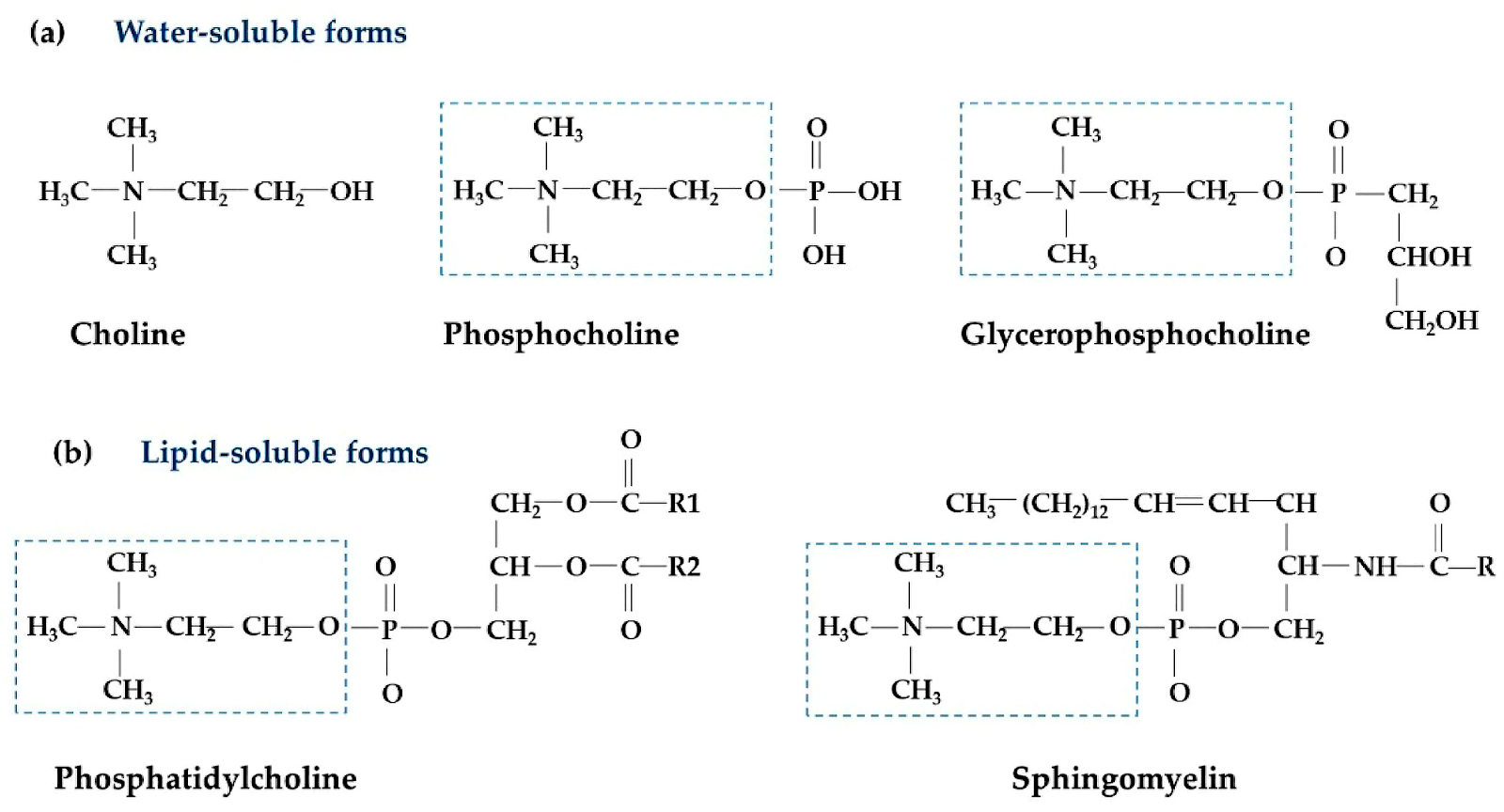
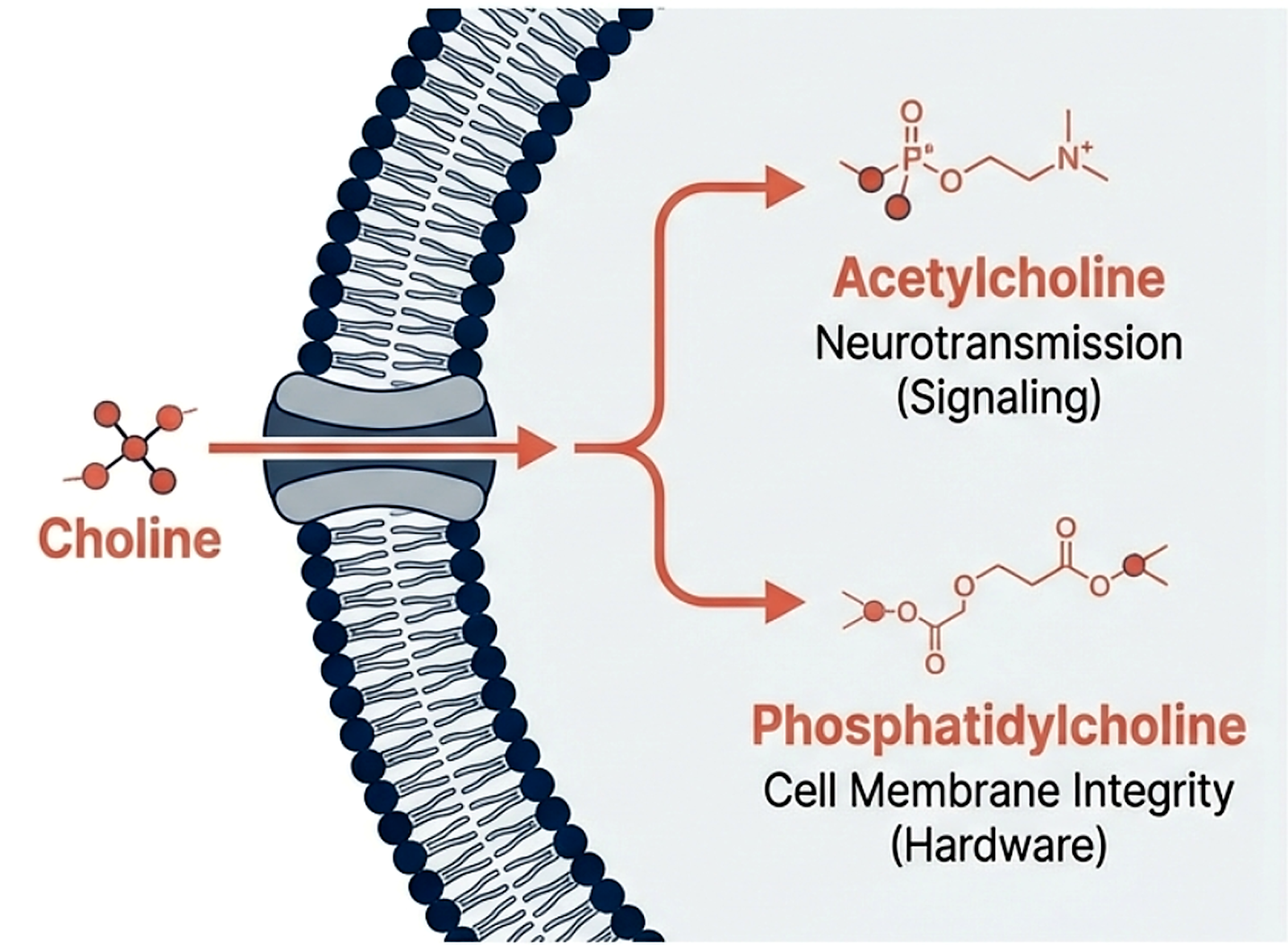
Choline is an essential water-soluble nutrient that the body uses to build cell membranes, manufacture the neurotransmitter acetylcholine, and generate methyl donors for gene regulation [3].
These three roles place choline at the center of systems that influence everyday performance: how cells repair themselves, how the brain encodes information, and how the body regulates gene expression.
Physical Structure
Every cell in your body is wrapped in a membrane, a flexible barrier that keeps the cell intact and responsive. Choline is built directly into that boundary as phosphatidylcholine, one of its primary structural lipids [4].
These membranes have to be repaired continuously, especially when they're put under pressure.
Like when you're exercising hard, muscle fibers sustain serious mechanical strain, and the outer membrane of the cell absorbs that force [5]. Getting stronger means rebuilding that structure over and over again. The raw material is phosphatidylcholine — which the body cannot synthesize without choline [6].
In a very real sense, choline is a major component of what your body is made of.
Electrical Signaling
Choline is also the mandatory precursor to the neurotransmitter acetylcholine. In the brain, acetylcholine helps encode new information — the fundamental process of transforming experience into learning [7].

This role becomes obvious when scientists shut the system down. In controlled studies, giving people scopolamine — a drug that blocks acetylcholine receptors — impairs new memory formation [8]. They literally can't learn.
In a foundational 1976 experiment, researchers fed rats diets that differed only in choline content. Serum choline tracked intake almost perfectly (r = 0.91). And brain acetylcholine levels rose in parallel [9].
In the caudate nucleus — a motor-control hub rich in cholinergic signaling — acetylcholine concentrations were about 28% higher at moderate intake and 45% higher at higher intake compared to choline-deprived animals.
In summary, choline intake shapes acetylcholine production, and acetylcholine governs how the brain learns.
Epigenetic Regulation
Finally, choline feeds into methylation, one of the body’s major regulatory networks.
When choline is converted to betaine, it helps regenerate S-adenosylmethionine (SAM), which donates methyl groups [10]. A methyl group is a tiny chemical tag. Attach that tag to DNA or proteins and their behavior changes. This tagging system influences hundreds of reactions across the body — including the brain [11].
For a memory to stick, neurons have to change which genes are turned on, and how strongly. Methylation is one way the brain locks those changes in place [12].
In animal studies, increasing choline intake changes DNA methylation patterns in the hippocampus — a region central to learning and memory — and improves performance on memory tasks later on [13].
The same regulatory system shapes how we absorb stress. Acute stress activates immediate-response genes in the hippocampus — genes that surge to encode the experience. In a controlled experiment, researchers increased methyl donor availability before exposing animals to a stressor. The stress-response genes were dampened, and the animals showed less behavioral shutdown afterward [14].
Stress is unavoidable. But how deeply it imprints itself may be more adjustable than we assume, and choline appears to be one of the levers.
Benefits Of Choline
Choline’s structural and signaling roles scale into both cognitive performance and physical output. By building cell membranes and enabling acetylcholine signaling, it helps determine how efficiently the brain encodes information and how effectively muscles produce force.
Mental Performance
Across large population datasets, we see that people who consume more choline perform better on core cognitive functions [15].
Among older Americans, intake below ~187 mg per day was linked to 33–42% greater odds of landing in the lowest quartile for verbal learning, fluency, and processing speed [16].

A longitudinal study that followed participants for more than a decade found the same pattern. But these investigators went further — they looked inside the brain to figure out why.
They examined choline intake reported nearly ten years earlier and compared it with current MRI scans. Participants with higher earlier intake had ~44% lower odds of carrying a large burden of white-matter hyperintensities [17].
White-matter hyperintensities are lesions in the brain’s communication cables. They reflect breakdown of the myelin sheath, the insulation that allows signals to travel quickly and cleanly.
And this brings us back to structure. Choline is required to build the phospholipids in myelin membranes. Without adequate supply, insulation cannot be maintained indefinitely. Over years, small differences in membrane maintenance may add up into measurable differences in cognition.
Physical Performance
Most people treat muscle growth as a proxy for strength. But longitudinal training data have shown that changes in muscle size explain surprisingly little of the variance in strength gains [18]. In other words, you can add muscle without proportionally increasing force.
So what determines how new muscle actually performs?
In a tightly controlled resistance-training trial, researchers randomly assigned participants to three diets. None of these were clinically deficient doses of choline — both the low and moderate groups represent common levels of habitual consumption [19].
Low: ~50% of recommended intake
Moderate: ~70% of recommended intake
High: ~120% of recommended intake
Training was identical. But after 12 weeks, strength gains in the groups diverged sharply.
Low: ~19% improvement in strength
Both Moderate and High: ~47% improvement in strength
Nearly double for the groups who were getting at least ~70% of the RDI. Yet both groups built similar amounts of muscle. So what explains the ergogenic effect?

The divergence showed up in muscle quality, meaning how much force each unit of muscle could produce. Adequate choline improved muscle quality by ~46% whereas low intake only improved muscle quality by ~12%.
In other words, muscle size increased regardless. But only adequate choline translated that growth into meaningful strength.
Strength is expressed at the neuromuscular junction — the microscopic interface where motor neurons signal muscle fibers to contract. Every contraction begins when motor neurons release acetylcholine, triggering depolarization of the muscle fiber and initiating calcium release. Choline is the required substrate for that acetylcholine synthesis [5].
If choline supply is limited, acetylcholine release becomes a bottleneck. Muscle fibers may grow, but their ability to recruit and fire motor units efficiently lags behind. That distinction — tissue versus activation — is exactly what this trial exposed. And this extends beyond maximal strength. The neuromuscular junction governs every voluntary contraction.
In this respect, choline sets the ceiling on how effectively the nervous system can convert muscle into force.
How Much Choline Per Day?
Adults need 425 mg per day (women) or 550 mg per day (men) — roughly 7 mg per kilogram of body weight or about 3 mg per pound [20].
Most people are not hitting this target. National survey data show that only about 6% of adults exceed the current recommendation. The rest land somewhere below it, and often well below [21].
And these intake benchmarks weren’t established to optimize cognitive performance or training adaptations. It was set after controlled feeding studies showed that intakes below this range led to fatty liver and muscle damage.
So the official target reflects the minimum needed to prevent structural breakdown. Whether it represents a dose that maximizes cognitive performance or exercise adaptations is a separate conversation.
Choline Rich Foods
Foods highest in choline include liver, eggs, salmon, soybeans, and other animal proteins. Liver is the most concentrated source (over 300 mg per 3 oz serving), while a single egg provides roughly 125–150 mg [22-24].
Choline concentrates in tissues involved in rapid growth, lipid transport, or dense cellular structure.
Take eggs. An egg has one job: build an entire animal from scratch. That requires membranes — billions of them. Phosphatidylcholine is one of the dominant membrane phospholipids, so the yolk comes preloaded.
Soybeans follow the same logic. They’re embryos in waiting, stocked with phospholipids for rapid cell division the moment growth begins.
Liver is the true choline heavyweight because it’s managing lipid traffic. The liver assembles VLDL particles to export triglycerides, and VLDL requires phosphatidylcholine.
Muscle, meanwhile, is structurally dense tissue with constant membrane turnover and continuous neuromuscular signaling. So meat carries choline as part of its architecture, although not quite as much as liver or eggs.
Wherever membranes are being built, repaired, or transported, you can expect choline to accumulate.
Do Choline Supplements Work?
Yes — choline supplements reliably raise blood choline levels.
In head-to-head pharmacokinetic studies, matched doses of choline chloride, choline bitartrate, alpha-GPC, and egg phosphatidylcholine all increased plasma choline to a similar extent [25]
But here's the tricky part: even when they elevate plasma choline, not all forms produce the same functional effects in the brain.
In clinical trials, plain choline salts and lecithin often fail to show consistent cognitive benefits [26]. In contrast, specialized forms like alpha-GPC and citicoline have repeatedly been linked to improved attention, memory, and processing speed [27].
Which means increasing blood choline is only the first step.
Choline Supplements: The Research
Raising blood choline is pretty easy. Improving brain function via supplementation is a different matter.
The brain tightly controls what crosses the blood–brain barrier, and much of free choline is metabolized in the liver before contributing to central cholinergic signaling. That’s where form begins to matter [28].
Some compounds act like simple choline donors. Others arrive as brain-ready phospholipid intermediates, entering neurons in metabolically privileged states and directly influencing membrane biology and synaptic structure.
In the research, two forms repeatedly separate themselves from the pack as true nootropics: alpha-GPC and citicoline.*
Alpha-glycerophosphocholine (α-GPC, or GPC)
Alpha-GPC is a specialized form of choline designed to reach the brain intact. Most dietary choline is processed in the liver before it ever crosses the blood–brain barrier. Alpha-GPC bypasses that bottleneck [29].
But more than just feeding the system, it tunes it.* Animal work shows that aging brains lose M1 acetylcholine receptors in regions like the hippocampus and striatum — key hubs for memory and executive control [30]. At the same time, neuronal membranes become more rigid, impairing signaling efficiency [1].
When older animals were given Alpha-GPC, two things happened. First, M1 receptor density rebounded toward youthful levels. Second, they regained membrane fluidity. So, the receiving equipment came back online and the wiring became more flexible [31]. Notably, plain choline didn’t move the needle. Only alpha-GPC triggered these effects.
Human data points in the same direction. Improving cognition in healthy young adults is tough because baseline performance is already high. But alpha-GPC did it.*
In a randomized controlled trial, reaction time improved by about 9%, working memory improved by 8–10%, and executive control (Stroop performance) improved roughly six-fold over placebo [32]. So alpha-GPC restores signaling efficiency in aging neurons, but also sharpens performance even in healthy young people.*
Citicoline
Citicoline (CDP-choline) is a choline source that broadens the supply chain.
It supplies choline for acetylcholine production, but it also yields uridine, which feeds the phospholipid pathways that stabilize new synapses [33]. Building memory depends on firing neurons and locking changes into structure. Citicoline supports both [34].*
That advantage really shows when the brain is under strain.* Like sleep loss. REM sleep deprivation wrecks memory consolidation. Rats deprived of REM for four days can learn a maze — but they forget it right away.
Unless they get citicoline.
Given before training, citicoline erased the retention deficit. Sleep-deprived animals performed just like rested controls [35].
And aging creates its own version of that strain.
In a 12-week double-blind trial, older adults took either citicoline or placebo and completed a battery of memory tests [36]. Citicoline improved a critical cognitive function: taking in structured information and recalling it accurately after a delay. In practice, this means remembering the details of a story or the sequence of events in a passage.
On that measure, the citicoline group improved 2.5× more than placebo. And on a composite memory score, the effect widened: overall memory improved five-fold compared to placebo.
Across models, citicoline helps the brain encode information and retain it, even when under duress.*
Frequently Asked Questions
How Much Choline in Eggs?
A large egg contains about 125–150 mg of choline, providing roughly 30–40% of the daily Adequate Intake for women (425 mg) and 20–30% for men (550 mg). Eggs are therefore one of the richest dietary sources of choline.
Almost all of that choline is found in the yolk, not the white [37]. The white, by contrast, is mostly water and protein and contains virtually no choline [38].
Whole eggs also deliver choline in a highly bioavailable form — sometimes even surpassing supplements [39]. In a randomized crossover trial, eating three eggs per day (~400 mg choline) increased fasting plasma choline by about 20%. Meanwhile, an equivalent amount provided as choline bitartrate did not [40].
How Much Choline is in Qualia Mind?
Qualia Mind provides ~50 mg of choline per serving.
That comes from:
115 mg Alpha-GPC (~40 mg choline)
50 mg Citicoline (CDP-choline) (~9 mg choline)
This is not intended to meet your total daily choline requirement. It’s a targeted, nootropic dose.
Alpha-GPC and citicoline are the two choline forms most consistently shown to improve cognitive performance. They cross into the brain efficiently and support both acetylcholine signaling and membrane synthesis.*
The rest of the Mind formula reinforces that same axis:
Acetyl-L-carnitine supplies acetyl groups used in acetylcholine formation.*
Pantothenic acid (vitamin B5) supports CoA and acetyl-CoA production.*
Phosphatidylserine supports neuronal membrane structure.*
The formula is built around neurotransmission and synaptic integrity rather than bulk intake.*
*These statements have not been evaluated by the Food and Drug Administration. These products are not intended to diagnose, treat, cure or prevent any disease.