

Get More
Youthful
Energy
& Boost Your
Cellular Health

Over 30? Age On Your Terms.
• Helps naturally eliminate senescent cells.
• Only needs to be taken 2 days a month.
• Turn back the clock on your aging symptoms.
• Helps Counter Age-Related Joint Challenges*
WHY Qualia
Understanding
How We Age
Senolytic Ingredients
Help ELIMINATE Senescent Cells
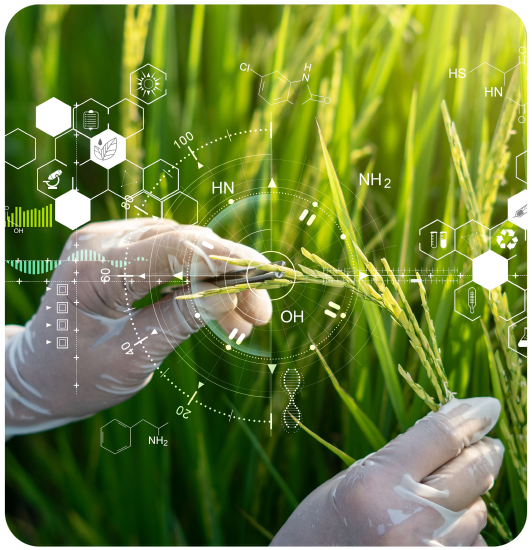
Senolytic ingredients are the biggest discovery in aging
science of the last decade, but very few people have started
taking advantage of this medical breakthrough.



Qualia Senolytic
Clinically Tested
Two-day Cell Rejuvenation Regimen
 Clinically Tested Formula* Can be taken with any Qualia product* A Favorite of Healthcare Practitioners Patent Pending Formula
Qualia Senolytic is a groundbreaking, clinically tested supplement taken just two days a month, that helps your body naturally eliminate senescent cells, to age better at the cellular level.*
The ultimate recipe for cell repair & rejuvenation

Quercetin has been on the very short list of most studied senolytic compounds.
Quercetin is a yellow plant pigment. Its name is derived from a Latin word (quercetum) for a group of oak trees, because quercetin was originally identified in oaks. Some ingredients—quercetin is one of them—are poorly absorbed. This creates an obstacle, of sorts, for getting enough of the ingredient into the body. We opted for Quercefit®, because this unique and patented Phytosome® formulation of quercetin was created to overcome the bioavailability obstacle. By creating a quercetin phytosome complex using sunflower lecithin, the bioavailability is dramatically enhanced (2).*

Not too long after the discovery that quercetin had potential as a senolytic, a search began to find out whether any other polyphenols might have similar potential. This search turned up fisetin, with the results of the initial search suggesting that fisetin may have even more potential than quercetin (3). In this initial research, fisetin supported the reemergence of some aspects of healthy tissue structure and function in animals, essentially restoring homeostasis in some tissues as the animals got older (3).* We included fisetin in Qualia Senolytic, because it has shown potential for managing senescent cells, with some experts we've communicated with feeling it may be the most promising natural compound.*

Longvida® was developed by neuroscientists to provide bioabsorbable curcumin to support brain health and cognitive function—it is the Cognitive Curcumin of Choice®.*

Olive leaf extract, standardized for oleuropein, is included to support the management of stressed cells in joints to help maintain healthy joint function with aging.*

Your happiness is guaranteed.
If you do not love Qualia for any reason, simply get in touch via phone or email and let us know you'd like a refund. More on our 100-day guarantee here.
Health And Fitness
Leaders Who Love
Qualia
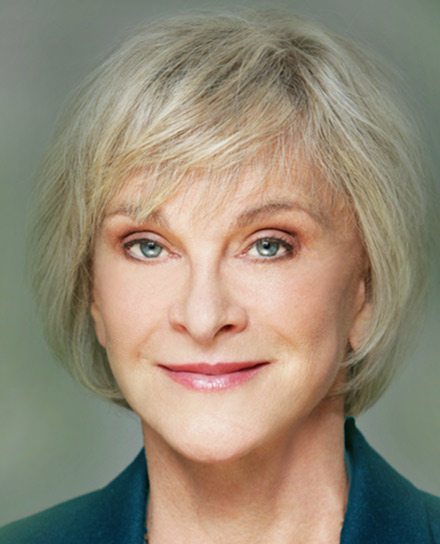
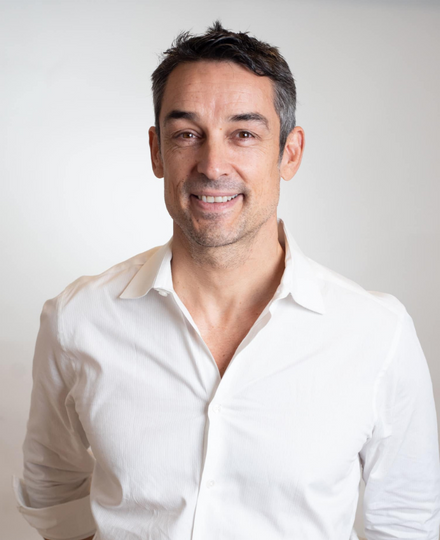
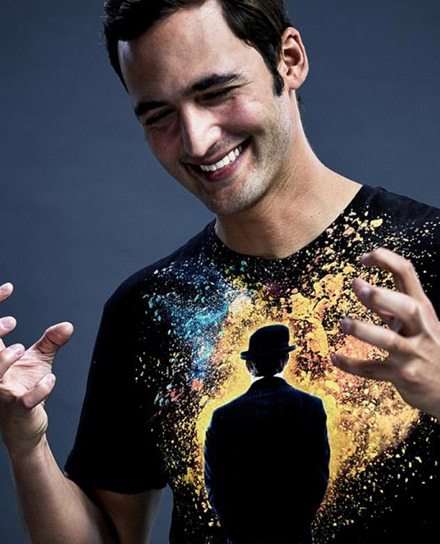
Qualia products are used and loved by some
of today's brightest minds in business, sport,
and personal wellness.











Reviews
References
1.
Y. Zhu et al., Aging Cell. 14, 644–658 (2015).
2.
A. Riva, M. Ronchi, G. Petrangolini, S. Bosisio, P. Allegrini, Eur. J. Drug Metab. Pharmacokinet. 44, 169–177 (2019).
3.
M. J. Yousefzadeh et al., EBioMedicine. 36, 18–28 (2018).
4.
S. Romashkan, H. Chang, E. C. Hadley, J. Gerontol. A Biol. Sci. Med. Sci. 76, 1144–1152 (2021).
5.
H. M. Awad et al., Chem. Res. Toxicol. 14, 398–408 (2001).
6.
Q. Jiang et al., Curr. Pharm. Biotechnol. 19, 428–437 (2018).
7.
X. Lu, Y. Li, X. Li, H. A. Aisa, Oncol. Lett. 14, 1993–2000 (2017).
8.
S. Verma et al., J. Recept. Signal Transduct. Res. 37, 391–400 (2017).
9.
S. Dirimanov, P. Högger, Biomolecules. 9 (2019), doi:10.3390/biom9060219.
10.
J. Fu et al., PLoS One. 7, e49194 (2012).
11.
A. Kim, J.-M. Yun, J. Med. Food. 20, 782–789 (2017).
12.
M. Hytti et al., J. Nutr. Biochem. 42, 37–42 (2017).
13.
K. Sak, K. Kasemaa, H. Everaus, Food Funct. 7, 3815–3824 (2016).
14.
H. Cherif et al., J. Clin. Med. Res. 8 (2019), doi:10.3390/jcm8040433.
15.
S. Pirmoradi, E. Fathi, R. Farahzadi, Y. Pilehvar-Soltanahmadi, N. Zarghami, Drug Res. . 68, 213–221 (2018).
16.
H. Jin et al., Cell. Signal. 33, 79–85 (2017).
17.
S. Prasad, B. B. Aggarwal, in Herbal Medicine: Biomolecular and Clinical Aspects, I. F. F. Benzie, S. Wachtel-Galor, Eds. (CRC Press/Taylor & Francis, Boca Raton (FL), 2012; https://www.ncbi.nlm.nih.gov/pubmed/22593922).
18.
E. Mutlu Altundağ et al., Nutr. Cancer. 73, 703–712 (2021).
19.
N. S. Srivastava, R. A. K. Srivastava, Phytomedicine. 52, 117–128 (2019).
20.
M. M. Abdel-Diam et al., Environ. Sci. Pollut. Res. Int. 26, 3659–3665 (2019).
21.
S. Kundur et al., J. Cell. Physiol. 234, 11103–11118 (2019).
22.
E. Mutlu Altundağ, A. M. Yılmaz, S. Koçtürk, Y. Taga, A. S. Yalçın, Nutr. Cancer. 70, 97–108 (2018).
23.
G. H. Heeba, M. E. Mahmoud, A. A. El Hanafy, Toxicol. Ind. Health. 30, 551–560 (2014).
24.
A. Montgomery, T. Adeyeni, K. San, R. M. Heuertz, U. R. Ezekiel, J. Cancer. 7, 1250–1257 (2016).
25.
V. Alfonso-Moreno, A. López-Serrano, E. Moreno-Osset, Rev. Esp. Enferm. Dig. 109, 875 (2017).
26.
S. Dalimi-Asl, H. Babaahmadi-Rezaei, G. Mohammadzadeh, Iran. J. Med. Sci. 45, 477–484 (2020).
27.
S. O. Ali, H. A. Darwish, N. A. Ismail, Basic Clin. Pharmacol. Toxicol. 118, 369–380 (2016).
28.
M. Nasiri et al., Asian Pac. J. Cancer Prev. 14, 3449–3453 (2013).
29.
N. Abdel-Magied, A. A. Elkady, Exp. Mol. Pathol. 111, 104299 (2019).
30.
H. Avci et al., Exp. Toxicol. Pathol. 69, 317–327 (2017).
31.
V. S. Gota et al., J. Agric. Food Chem. 58, 2095–2099 (2010).
32.
Y. Wang et al., Aging . 8, 2915–2926 (2016).
33.
X. Zhang et al., Aging Cell. 17, e12780 (2018).
34.
X. Liu et al., Bioorg. Med. Chem. 26, 3925–3938 (2018).
35.
L. O. Afolabi, J. Bi, L. Chen, X. Wan, Int. Immunopharmacol. 96, 107658 (2021).
36.
R. W. Morton, D. A. Traylor, P. J. M. Weijs, S. M. Phillips, Curr. Opin. Crit. Care. 24, 124–130 (2018).
37.
C. M. Dungan et al., Geroscience (2022), doi:10.1007/s11357-022-00542-2.
38.
Y. Saito, T. S. Chikenji, T. Matsumura, M. Nakano, M. Fujimiya, Nat. Commun. 11, 889 (2020).
39.
C. Yang et al., Aging . 10, 1356–1365 (2018).
40.
Y. Saito, T. S. Chikenji, Front. Pharmacol. 12, 739510 (2021).
41.
T. X. Y. Lee et al., Aging . 13, 16567–16576 (2021).
42.
J. Wu et al., J. Ginseng Res. 43, 580–588 (2019).
43.
C.-W. Hou et al., PLoS One. 10, e0116387 (2015).
44.
J. Wu et al., J. Funct. Foods. 58, 27–33 (2019).
45.
J. Wu et al., Aging . 12, 20226–20234 (2020).
46.
C. Petrella et al., Curr. Med. Chem. 28, 7595–7613 (2021).
47.
A. Medina-Remón et al., Br. J. Clin. Pharmacol. 83, 114–128 (2017).
48.
M. Finicelli, T. Squillaro, U. Galderisi, G. Peluso, Nutrients. 13 (2021), doi:10.3390/nu13113831.
49.
A. Mehmood, M. Usman, P. Patil, L. Zhao, C. Wang, Food Sci Nutr. 8, 4639–4655 (2020).
50.
A. Romani et al., Nutrients. 11 (2019), doi:10.3390/nu11081776.
51.
B. Barbaro et al., Int. J. Mol. Sci. 15, 18508–18524 (2014).
52.
B. Klimova, M. Novotný, K. Kuca, M. Valis, Neuropsychiatr. Dis. Treat. 15, 3033–3040 (2019).
53.
M. Varela-Eirín et al., Aging . 12, 15882–15905 (2020).
54.
H. Thoppil, K. Riabowol, Front Cell Dev Biol. 7, 367 (2019).
55.
M. Amaya-Montoya, A. Pérez-Londoño, V. Guatibonza-García, A. Vargas-Villanueva, C. O. Mendivil, Adv. Ther. 37, 1407–1424 (2020).
56.
C. Kang, Mol. Cells. 42, 821–827 (2019).
57.
J. Birch, J. Gil, Genes Dev. 34, 1565–1576 (2020).
58.
L. Zhang, L. E. Pitcher, V. Prahalad, L. J. Niedernhofer, P. D. Robbins, FEBS J. (2022), doi:10.1111/febs.16350.
59.
B. Menicacci, C. Cipriani, F. Margheri, A. Mocali, L. Giovannelli, Int. J. Mol. Sci. 18 (2017), doi:10.3390/ijms18112275.
60.
M. Malavolta et al., Mediators Inflamm. 2018, 4159013 (2018).
61.
A. Al Mamun et al., Eur. J. Pharmacol., 174991 (2022).
62.
L. J. Hickson et al., EBioMedicine. 47, 446–456 (2019).
63.
S. M. Woo, K.-J. Min, I. G. Chae, K.-S. Chun, T. K. Kwon, Mol. Carcinog. 54, 216–228 (2015).
64.
G. Deep, S. C. Gangar, C. Agarwal, R. Agarwal, Cancer Prev. Res. . 4, 1222–1232 (2011).
65.
H. Zhao, G. E. Brandt, L. Galam, R. L. Matts, B. S. J. Blagg, Bioorg. Med. Chem. Lett. 21, 2659–2664 (2011).
66.
E. Cuyàs et al., Food Chem. Toxicol. 132, 110645 (2019).
67.
G. Rizzo, L. Baroni, Nutrients. 10 (2018), doi:10.3390/nu10010043.
68.
D. Kusumoto et al., Nat. Commun. 12, 257 (2021).
69.
M. K. Sundaram et al., Anticancer Agents Med. Chem. 18, 412–421 (2018).
70.
I. A. M. Groh, C. Chen, C. Lüske, A. T. Cartus, M. Esselen, J. Nutr. Metab. 2013, 821082 (2013).
71.
E. P. Feener, J. M. Northrup, L. P. Aiello, G. L. King, J. Clin. Invest. 95, 1353–1362 (1995).
72.
J. Lee, J. Ju, S. Park, S. J. Hong, S. Yoon, Nutr. Cancer. 64, 153–162 (2012).
73.
G. Xie et al., J. Invest. Dermatol. 137, 1731–1739 (2017).